
Last updated August 25, 2026
Free on-site gate assessment - hinges, posts, and your LiftMaster or Nice gate operator checked before anything is quoted
The assessment is free and the quote is the invoice.
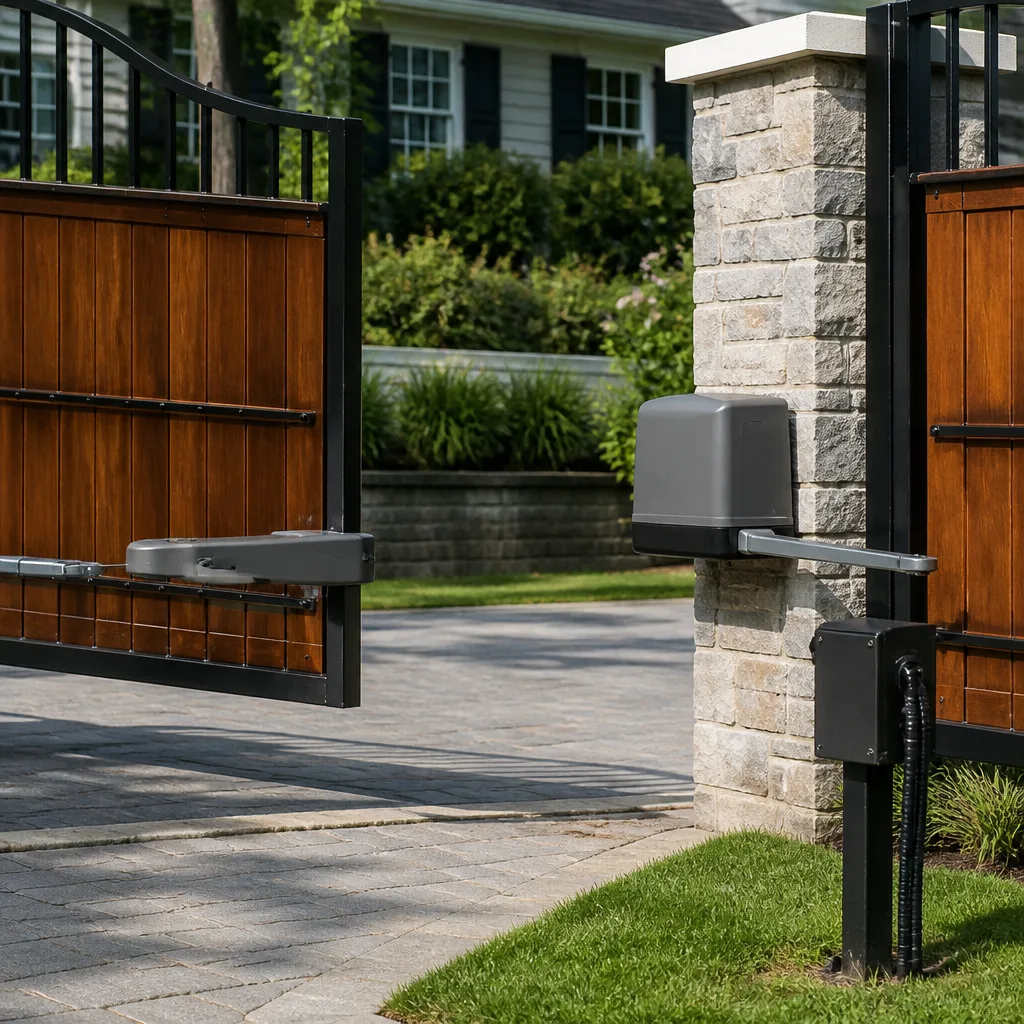
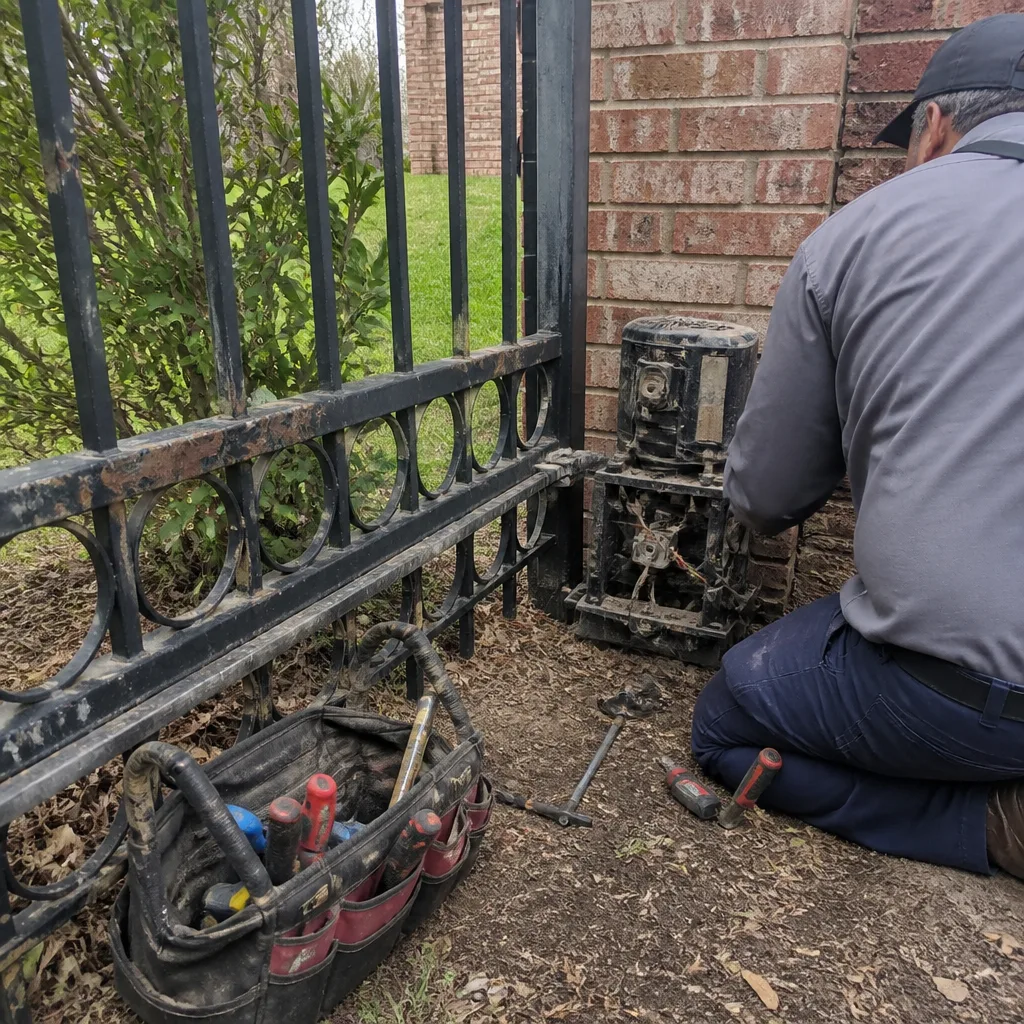 Before
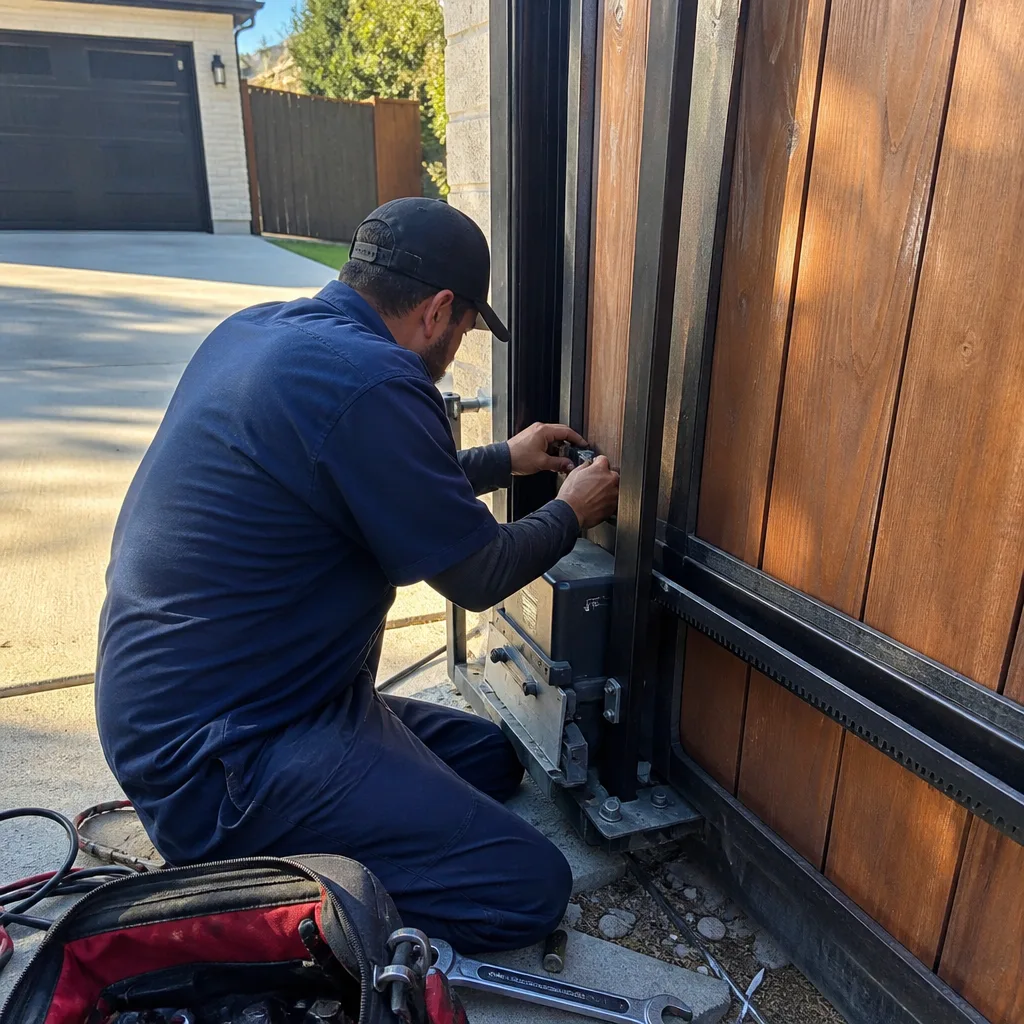 After
After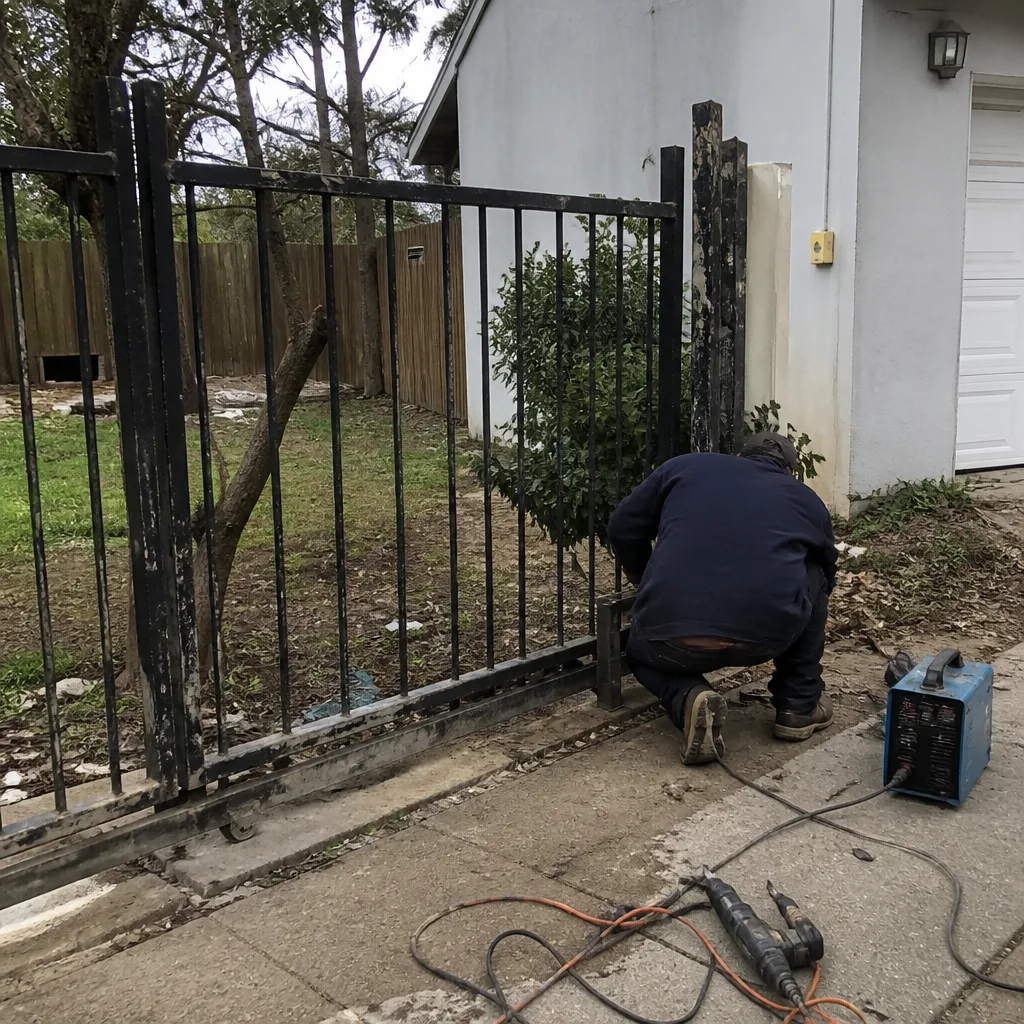 Before
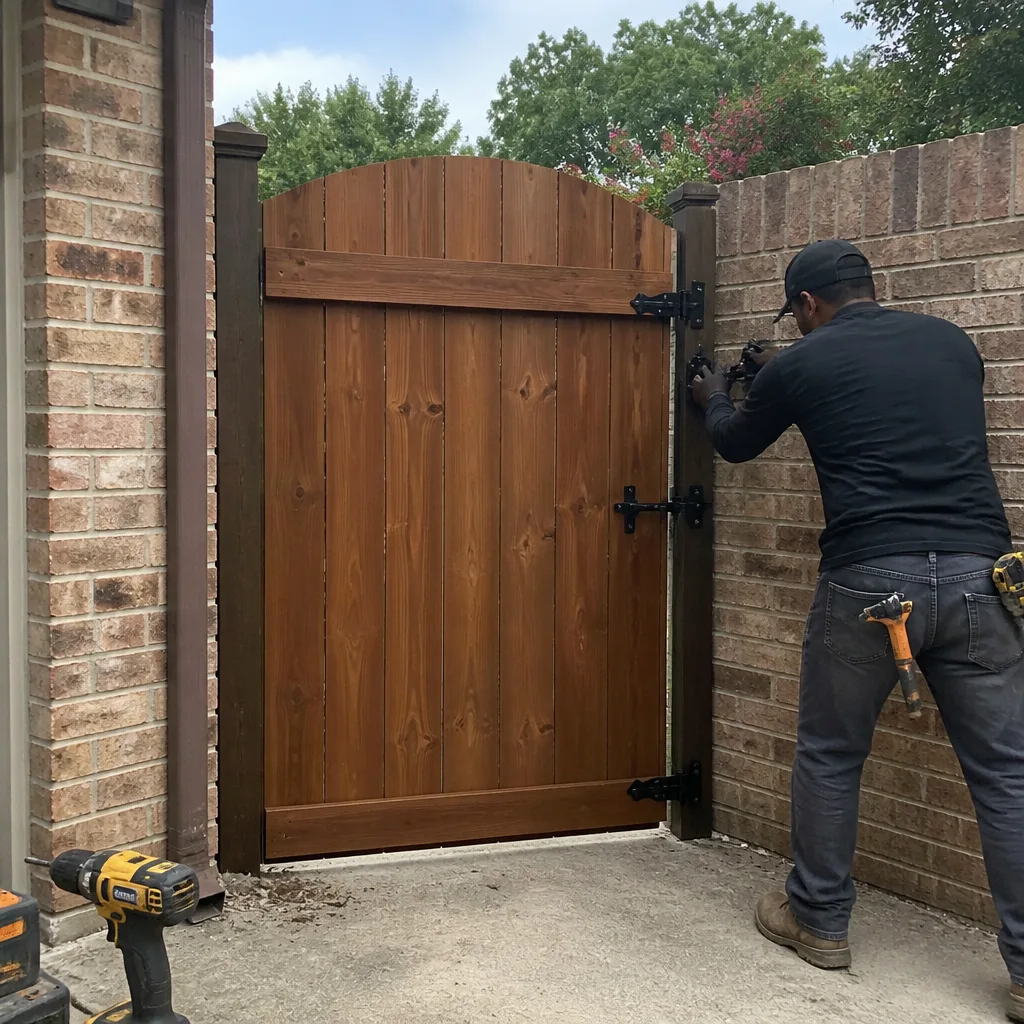 After
After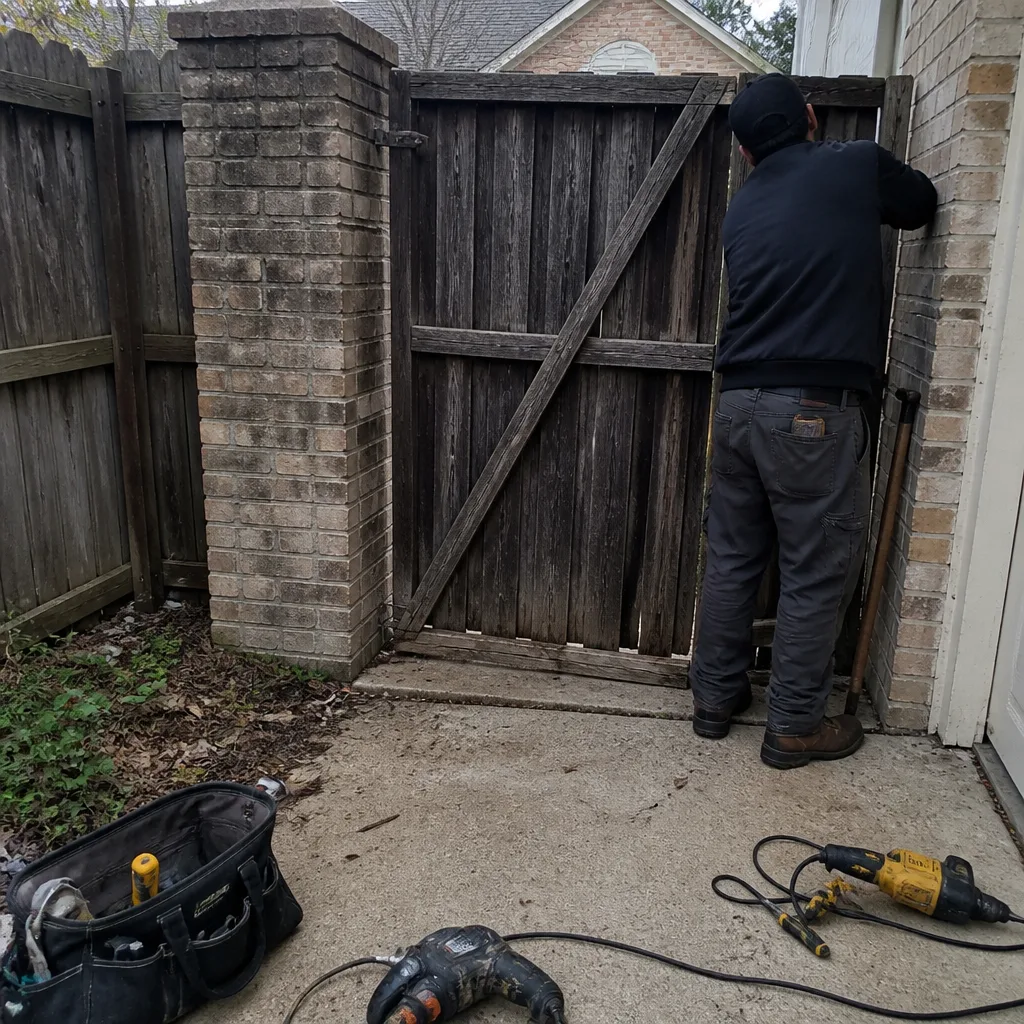 Before
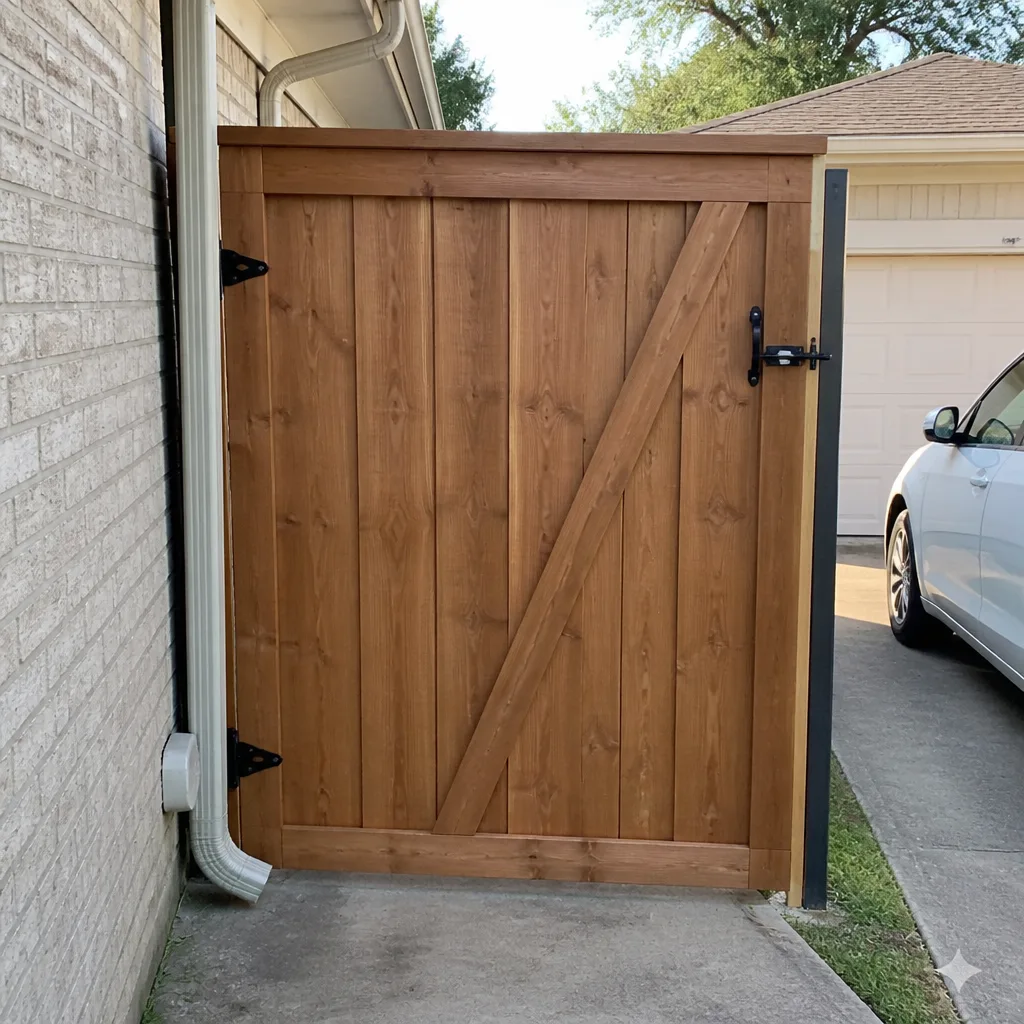 After
AfterThe Complete Guide to Gate Repair in Euless
Most gate failures in Euless don’t start with the motor. They start with the hinges, the sag, the soil shift, and the slow accumulation of Texas weather on metal that never gets a day off. Homeowners call us expecting to replace an opener that’s “finally died,” and more than half the time the opener is fine - the real problem is a gate that has drifted out of square over a decade of daily cycles and Euless clay soil that expands and contracts with every rain and drought. This guide walks you through how gates actually fail, what repair costs look like in this market, what you can safely check yourself, and when leaving it alone is the smartest move you can make.
Quick Answer
Gate repair in Euless typically costs between $180 and $850 depending on whether you’re dealing with a hinge alignment, a circuit board, a welded steel frame repair, or a full opener replacement. Most single-visit repairs - new hinges, limit switch adjustments, capacitor swaps, safety sensor realignment - run $180 to $400 and are completed the same day we arrive. Full opener replacements with a new motor and arm land between $600 and $1,500 installed, depending on the brand and gate weight. Call (806) 484-1837 for a free estimate - we quote the price before any work starts, in writing.
Table of Contents
- How Gates Fail in Euless: The Real Failure Points
- Gate Repair Costs in Euless: A Straight Price Guide
- Gate Opener and Motor Repair: What’s Worth Fixing vs. Replacing
- Hinges, Sag, and Steel Repair: The Foundation Most Repairs Ignore
- What to Check Yourself Before Calling (and What to Leave Alone)
- Common Mistakes to Avoid
- When to Call a Professional
- Frequently Asked Questions
- The Bottom Line
How Gates Fail in Euless: The Real Failure Points
In our experience across Euless - from the established neighborhoods off Highway 10 east toward Main Street, down through the post-war streets near Arborlawn, and up into the newer developments toward the Mid-Cities line - gate failures follow a predictable pattern. The motor is rarely the first thing to go. The structure fails first, and the motor gets blamed for it.
Here’s what actually happens, in the order we see it most often:
- The gate drifts out of square. A steel gate is a big rectangle of metal. It wants to sag. Over years of opening and closing - twice a day, every day, 365 days a year - the hinge side settles, the latch side drops, and the gate starts dragging or catching on the ground or the post. Euless sits on expansive clay soil. When it rains, the soil swells and pushes posts slightly. When it dries, it contracts and pulls them the other way. That slow breathing of the ground works on gate posts the same way it works on slab foundations, and the gate loses its alignment by fractions of an inch at a time.
- The hinges and rollers take the load. Once the gate is out of square, every operation puts force on the hinges they were not designed to take. Hinge bearings wear. Bolt holes elongate. Wheels on cantilever gates flatten on one side. The gate gets louder, slower, and harder on the motor.
- The motor compensates until it can’t. Most modern openers - Linear, Viking, BFT, Ghost Controls - have force adjustment and obstacle detection. They keep pushing harder and harder to move a gate that’s binding, right up until a limit switch trips, a capacitor burns, or the board overcurrents. The customer says “the motor died.” The motor died because it spent two years fighting a gate that needed eight hours of hinge and alignment work.
- Electronics fail from heat and power. Euless summers push 100 degrees for weeks at a time. Opener control boards, capacitors, and gearboxes sit inside steel boxes that bake in the sun. Power surges during spring storm season take out boards that were already running hot. We replace more fried control boards between May and September than the rest of the year combined.
Understanding this order matters because it changes the math on repair. If you fix the motor but not the sag, the new motor inherits the old problem and you’ll be back in the same spot within a year or two. That’s the repair call we make most often: the opener was replaced two years ago by someone who never touched the hinges, and now the new opener is failing the same way the old one did. Ironworks Gate Co. starts every opener repair by checking the gate itself first. It takes ten extra minutes and it’s the difference between a two-year fix and a fifteen-year fix.
Gate Repair Costs in Euless: A Straight Price Guide
We believe in putting the price on the table before you decide anything. Here is what gate repair actually costs in the Euless market, based on the work we do week in and week out. These are ranges for a standard single residential driveway gate, 10 to 14 feet wide, steel or tubular construction. Custom estate gates with ornamental ironwork, heavy solid-wood gates, or gates over 16 feet run higher because the materials and the labor time change.
- Hinge replacement (single or pair): $145-$325. Depends on gate weight and whether the hinge posts are reusable. Most residential hinge work lands around $200.
- Gate alignment and leveling (no parts): $120-$240. Includes resetting hinge tension, adjusting latch alignment, and lubricating all moving points.
- Weld repair to gate frame or hinge post: $180-$420. A cracked weld on a gate frame is usually a one-to-two-hour job, depending on access and position.
- Opener control board replacement: $250-$550. Part cost dominates here. Linear and Viking boards are generally on the more reasonable end; some BFT boards run higher.
- Capacitor or limit switch replacement: $140-$280. A very common repair, and usually a same-visit fix.
- Full opener replacement (motor and arm, same brand swap): $600-$1,200. The spread depends on the brand and horsepower.
- Full opener replacement with brand conversion: $800-$1,500. Converting from one brand to another - say, from a discontinued system to a current Linear or Ghost Controls unit - adds bracket work and wiring time.
- Safety sensor or photo-eye replacement: $120-$250. Includes alignment and testing.
- Wheel and roller replacement (cantilever or sliding gates): $160-$340. Includes bearing replacement where needed.
Two things to know about these numbers. First, we quote every job before a single bolt is turned. The price we give you is the price you pay - if we find something unexpected mid-job, we stop and talk to you before adding a dollar. No surprises on the bill, ever. Second, we structurally cannot tell you what your repair will cost over the phone without seeing the gate. Anyone who gives you a firm quote sight-unseen is either padding the number or planning to change it later. What we can tell you: estimates are free, and a second opinion on a written estimate from anyone else is also free.
Standing offer, because it matters: $50 off any repair over $250, and a permanent 5% discount for seniors and veterans. We’ve served Euless homeowners long enough to know that a fair price stated plainly beats a lowball price with fine print every time.
Gate Opener and Motor Repair: What’s Worth Fixing vs. Replacing
The first question most homeowners ask is “can you fix the motor, or do I need a new one?” The honest answer depends on three things: the age of the unit, the failure point, and the condition of the gate itself. Let’s walk through each.
When repair makes sense
- Capacitor failure. If your opener hums but doesn’t move, or moves slowly, the start capacitor is often the culprit. This is a $20 to $40 part and about an hour of labor. It is one of the best-value repairs in the gate business. A humming opener is not a dead opener.
- Limit switch misalignment. If the gate opens but won’t close all the way, or closes but keeps the motor running a few seconds too long, limit switches are the likely issue. Realignment or replacement is inexpensive, usually under $280 all-in.
- Safety sensor issues. If the gate reverses for no reason or refuses to close, the photo-eyes or edge sensors are the first thing we check. A good percentage of “opener failures” are simply a sensor that’s out of alignment, covered in grime, or has a broken wire. Fixes run $120 to $250.
- Receiver board replacement. If the remote stopped working but the keypad still works, it’s probably the receiver board. Replacing one is generally $180 to $350 depending on brand.
When replacement makes more sense
- The opener is more than 12 to 15 years old. At that age, a failed gearbox or control board often presages more failures within a year or two. You can keep nursing the unit with repeated $300 to $500 repairs, or replace it once for $800 to $1,500 and get another 12 to 15 years. The math usually favors replacement around the 15-year mark.
- The manufacturer is gone or parts are discontinued. We run into this regularly with older systems. If the motor is fine but the board is dead and the board is no longer manufactured, your options narrow fast. Sometimes we can source NOS parts; sometimes a conversion to a current system is the only real fix.
- The motor is undersized for the gate. If a lightweight opener was hung on a heavy gate at some point, it’s been working too hard its whole life. Replacing it with a properly sized unit - and we’ll calculate the gate weight, cycle duty, and wind load - fixes the chronic failures correctly for good.
We’re factory-trained on nine automation brands, including BFT, Linear, Viking, and Ghost Controls, so the fix or replacement we recommend is one we can complete confidently the same day, whatever is on the driveway. A live person answers every call, 24 hours a day, 7 days a week - no voicemail trees. When a gate fails, it’s usually blocking your car or leaving your yard open to the street, and nobody should wait until Monday morning for a phone call back.
Hinges, Sag, and Steel Repair: The Foundation Most Repairs Ignore
If we were only allowed to give one piece of gate advice to every Euless homeowner, it would be this: the hinges are the gate. Everything else hangs off them. When hinges are right, the opener works easy and the gate swings smooth for years. When hinges are wrong, nothing else stays right for long.
Here’s what goes wrong with hinges, in the order of frequency:
- Bearing wear. Good gate hinges have sealed bearings. Cheap hinges have bushings. Bushings wear fast in Texas heat and dust. We replace more bushing-style hinges in Euless than any other single hinge problem.
- Bolt hole elongation. Over time, the holes where hinges bolt to the post or the gate frame stretch from load cycling. Stretching lets the gate settle and sag even if the hinges themselves are fine. The fix is often weld-filling the holes and re-drilling, or going up a bolt size with a proper fit.
- Weld cracking at the hinge. On welded steel gate frames, the hinge weld itself can crack from years of cyclic stress. This is not a structural emergency, but it should be addressed - a cracked weld grows, and a growing crack eventually leaves the gate hanging on the latch side only.
- Post lean. In Euless’s clay soil, gate posts can lean over years, especially if the original footing was undersized. A leaning post means a sagging gate no matter how good the hinges are. Fixing this properly means resetting the post in a larger footing or reinforcing the existing one.
What we do when a gate comes to us with sag or bind: we inspect the hinges, check the frames for racking, level the gate on its posts, and if welding is needed, we handle it right there on the truck. Welding is not a sideline for us - it’s half our trade. A repaired hinge post with a proper weld and a re-leveled gate is the fix most homeowners should have gotten the first time around.
What to Check Yourself Before Calling (and What to Leave Alone)
Some gate issues are safe for a homeowner to look at, and a quick check can save you a service call. Some are absolutely not. Here’s the dividing line.
Safe to check yourself
- Debris on the track or in the path. For sliding and cantilever gates, leaves, mud, rocks, or a misaligned wheel track are common culprits. Clear the track and try the gate again.
- Photo-eye alignment. If your gate reverses or won’t close, look at the safety eyes near ground level. If one has been bumped out of line - by a lawnmower, a kid’s bike, a delivery - realign it so both units face each other. This is a five-minute fix and we regularly walk callers through it over the phone.
- Remote battery. If the keypad opens the gate but the remote doesn’t, the remote battery is the first check. A $5 battery fixes a lot of “opener failures.”
- Blockage on the gate arm. Vines, string, or debris wrapped around the opener arm can bind it. Look for foreign objects near the attachment points.
- Lubrication on hinges. If the gate squeaks or grinds, a bit of appropriate lubricant on the hinge pins and wheels can quiet it and reduce wear. Dry squeaks turn into worn parts eventually, so this is worth doing a couple of times a year.
Leave alone and call us
- Anything involving the opener motor opened up. The inside of a gate opener has a capacitor that stores energy even with the power off. Touching the wrong terminal can put you on the ground. Do not open opener housings.
- Anything with wires or power. If a wire is loose, melted, or chewed, do not try to patch it yourself. Call us. We were trained on these systems and we test everything before we leave.
- Weld repair and structural steel. A cracked weld or a leaning post is not a DIY job. Our technicians carry welding equipment and do this work every week. It is safer, faster, and cheaper done right the first time.
- The gate arm under tension. Some opener arms are under constant tension by design. Releasing that tension improperly can cause the arm to snap free. Leave arm work to us.
- Heavy gate lifting and adjustment. A 14-foot steel gate weighs several hundred pounds. If it comes off its track or drops off a hinge, do not try to muscle it back into place. A gate that comes down on a person causes serious injury. Call (806) 484-1837 and we’ll get someone out.
If you’re not sure which category your problem falls into, call us anyway. We’d rather spend five minutes on the phone helping you identify the issue for free than have you take a risk with a heavy piece of moving steel.
Common Mistakes to Avoid
- Replacing the opener without checking the gate structure. If the gate sags or binds, a new opener will work hard from day one and fail early. Align the gate first. We check this on every opener call as standard practice.
- Buying the cheapest opener available online. Undersized or off-brand openers fail sooner, and replacement parts can be impossible to find two years later. Spend once on a properly sized unit - you’ll save money across ten years.
- Ignoring small noises. A squeak, a grind, a whine - these are early warnings. When you write them off for six months, the repair usually grows from a hinge service to a full alignment plus a motor. Early calls are cheaper calls.
- Letting a gate lean into the post. A gate resting against its post or the ground is transferring load constantly. The longer it runs out of square, the more components wear unevenly. Level the gate before the wear spirals.
- Hiring a generalist for motor work. A handyman can replace a hinge. Gate automation is its own discipline - brand-specific boards, protocol wiring, torque settings, and safety compliance. We’ve lost count of the systems we’ve corrected after a generalist worked on them. One visit from a gate specialist is cheaper than two visits from someone learning on your gate.
- Skipping the safety sensors. It is tempting to disable or bypass a photo-eye that keeps false-triggering. Never do this. Safety sensors exist to protect people, pets, and vehicles from a moving gate. The correct fix is alignment or replacement, not bypassing. It’s a safety hazard and it leaves you liable if someone gets hurt.
- Waiting until the gate fails completely. Most gate failures announce themselves weeks or months before the actual breakdown. A gate that’s slower, louder, or jerky is telling you something. Calling at the first sign costs less, takes less time, and keeps you from being locked in or locked out on the day you need it most.
When to Call a Professional
Call us when the gate won’t open or won’t close and you need your car out or your yard secured. Call us when you hear new noises, when the gate moves slower than it used to, when the remote works only sometimes, or when the safety sensors keep false-triggering. Call us when the hinges look dropped, the gate scrapes the ground, or you can see a crack in a weld. Call us if a storm hit and the opener now does nothing. And call us if someone else repaired the gate and it still isn’t right - a second opinion is free, and we’ll give you a written answer either way. Ironworks Gate Co. offers free estimates in Euless - call (806) 484-1837 any hour, any day. A live person answers. We’ll schedule a visit, quote the work in writing before we start, and stand behind it with the 90-Day Done Right Promise when we finish.
Frequently Asked Questions
Gate repair in Euless typically ranges from $180 to $850, with most single-visit fixes - hinge replacement, alignment, sensor repair, capacitor swaps - landing between $180 and $400. Full opener replacements with installation run $600 to $1,500 depending on brand and gate size. Every job is quoted in writing before work begins. Call (806) 484-1837 for a free estimate specific to your gate.
Most repair calls in Euless are handled the same day or the next day, and we complete the vast majority of jobs in a single visit. We carry parts for nine major brands on our trucks - including BFT, Linear, Viking, and Ghost Controls - so we fix the issue on the first trip more often than not. Call (806) 484-1837 and we’ll tell you exactly when we can be there.
A full gate installation includes the gate itself, hinge posts and hinges, mounting hardware, leveling and alignment, the opener and arm, safety sensors, any required keypad or remote programming, and cleanup. We quote the complete scope before we start so there’s no ambiguity about what’s included. Call (806) 484-1837 for a free measure and written quote.
Yes. We handle the low-voltage and line-voltage work required for gate openers, including the power run from the house to the gate, the safety edges and photo-eye wiring, and the keypad and intercom connections. This is part of a complete installation, not an extra you’ll be surprised by later. The price is agreed before work starts.
We fix 40-year-old gates regularly. Steel and welded frames can absolutely be brought back - new hinges, a re-level, a weld repair, and a modern opener can make a 40-year-old gate close like the day it was hung. Replacement is only necessary when the frame is rusted through or damaged beyond structural safety. Call (806) 484-1837 and we’ll tell you honestly which path yours is on.
Yes, four of them. $50 off any repair over $250. A free second opinion on any written estimate from another company. An $89 seasonal tune-up that includes lubrication, alignment check, sensor testing, and opener inspection. And a permanent 5% discount for seniors and veterans. Call (806) 484-1837 and mention which one applies when you book.
The Bottom Line
Gates fail slowly before they fail suddenly, and most failures trace back to the structure underneath the automation - hinges, sag, soil movement, and weld fatigue. That’s the insight that saves Euless homeowners the most money: fix the gate before the opener, and both last longer. When you do need a repair, get a clear price in writing up front, hire someone who specializes in gate automation rather than a generalist, and don’t put off the small noises or the slight sag. The gate is telling you something. Listen to it early, and a repair that would have been $200 stays $200 instead of becoming $1,400 a year later. We’ve been serving Euless for over 42 years with a simple approach: do the job right, quote it honestly, and stand behind it in writing. Call (806) 484-1837 for a free estimate - a live person answers, any hour, any day.
Written by Victor Salinas, Owner at Ironworks Gate Co., serving Euless since 2013.