
Last updated August 25, 2026
Free on-site gate assessment - hinges, posts, and your LiftMaster or Nice gate operator checked before anything is quoted
The assessment is free and the quote is the invoice.
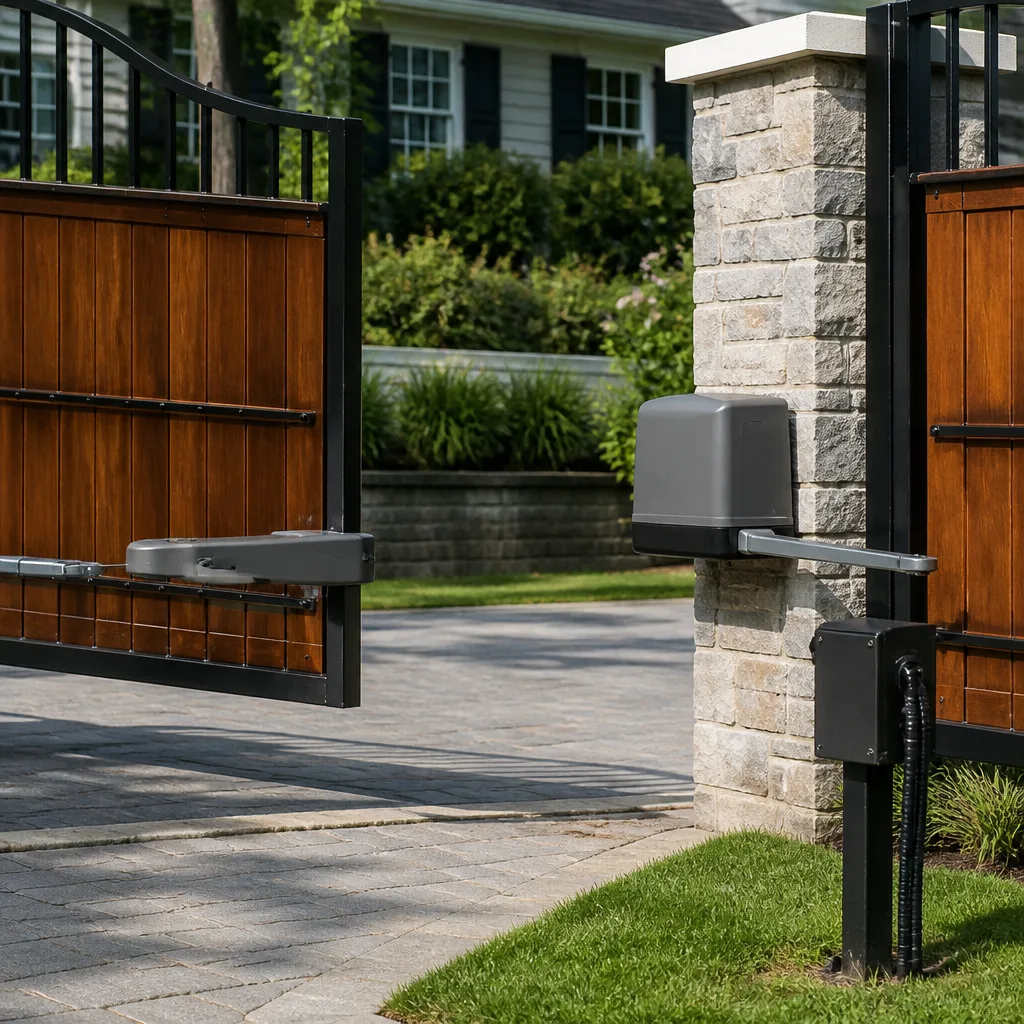
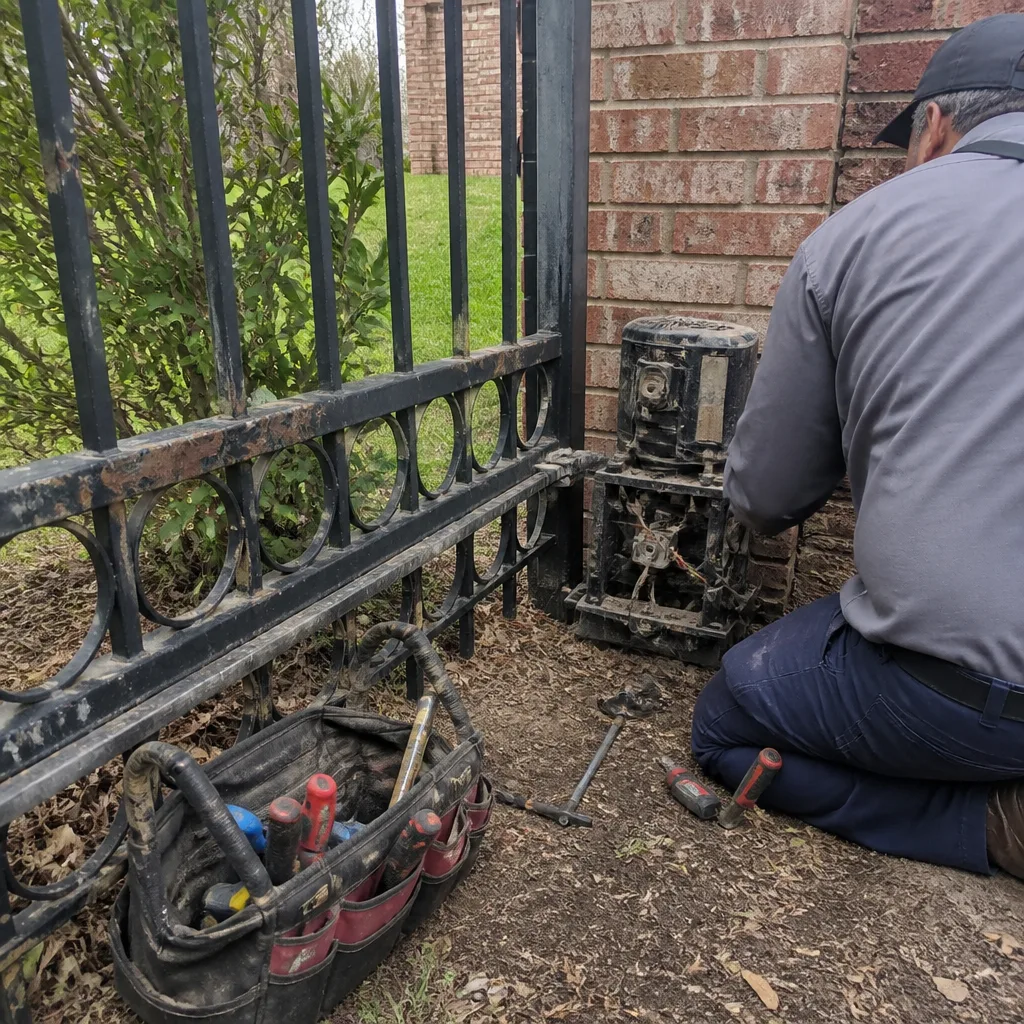 Before
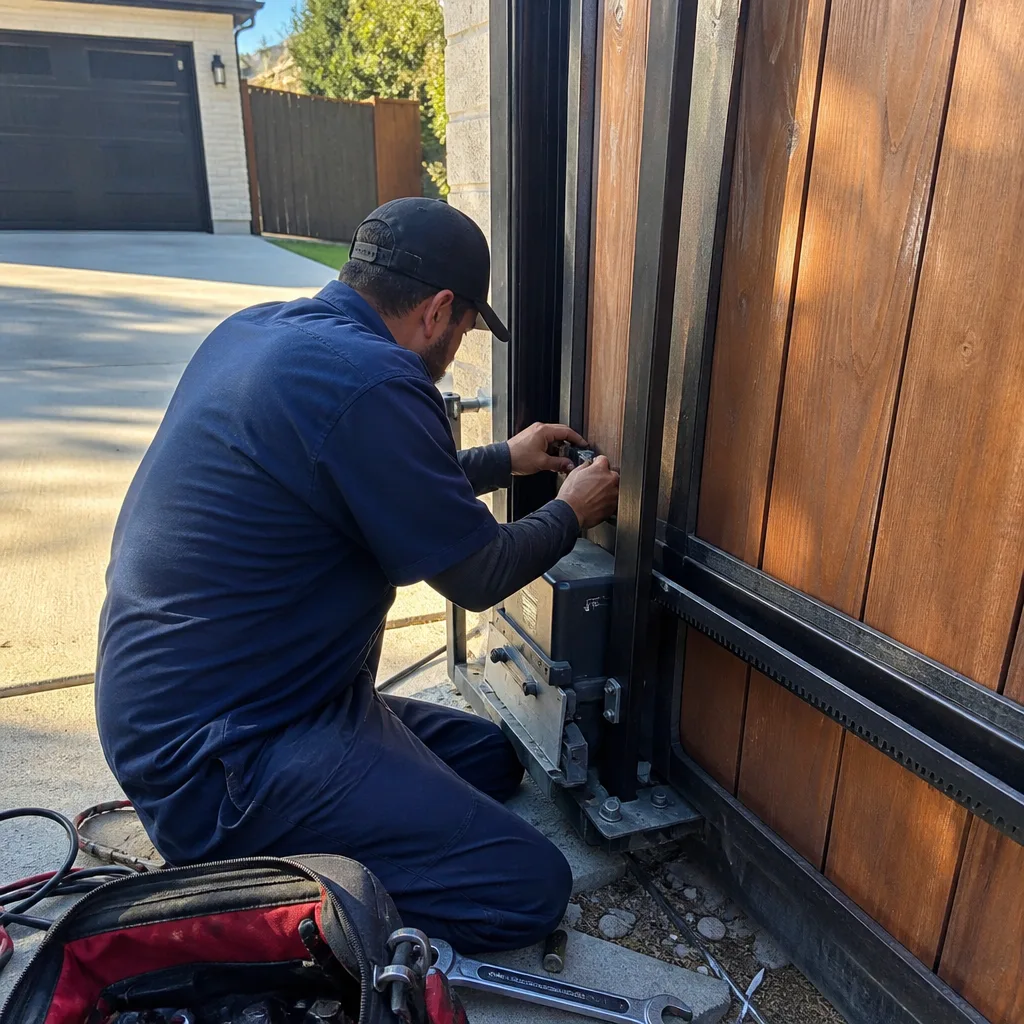 After
After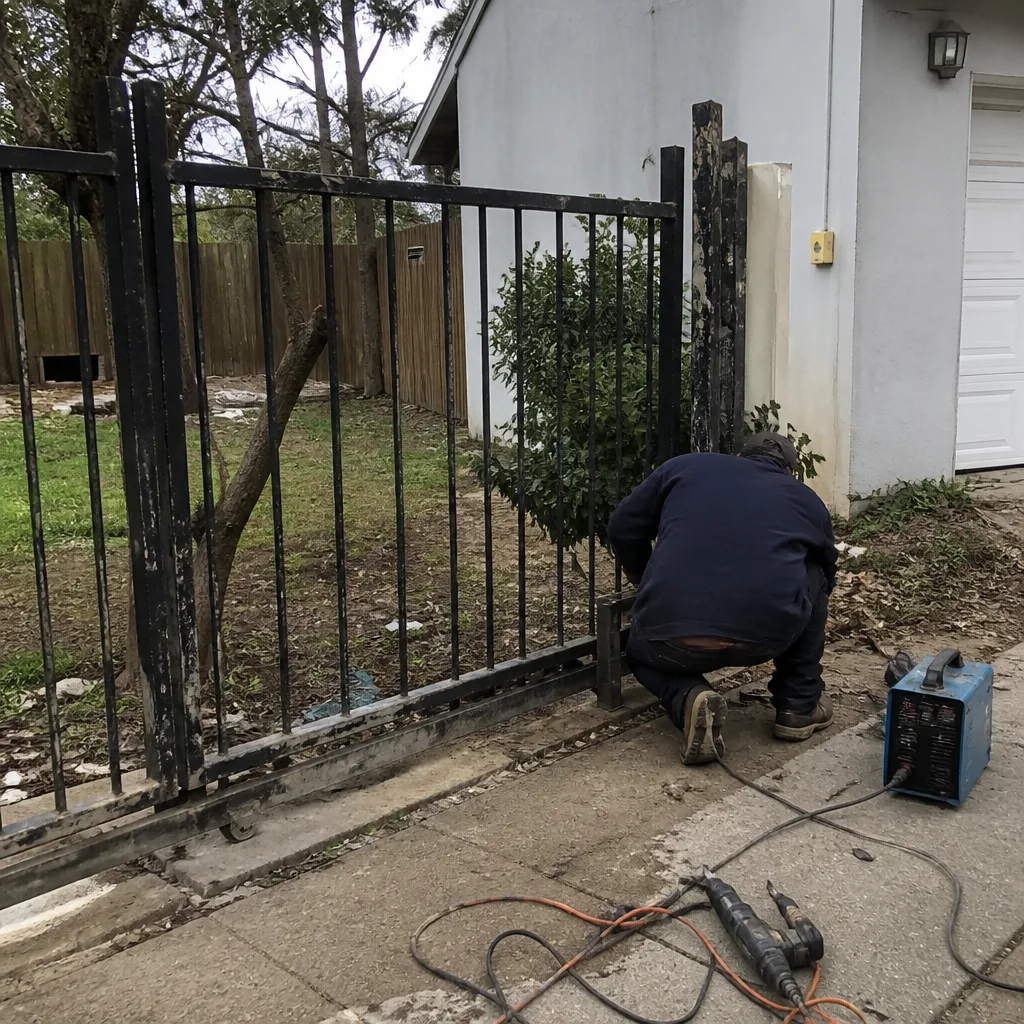 Before
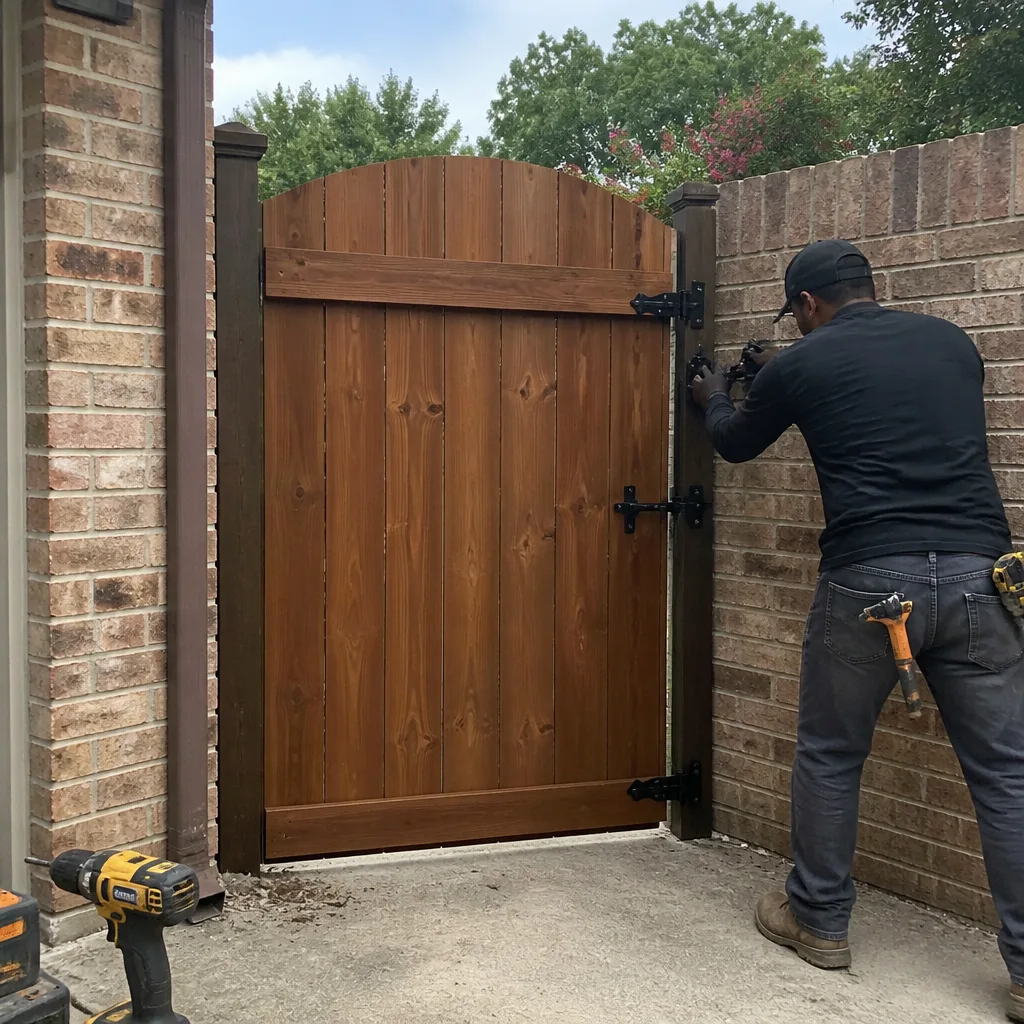 After
After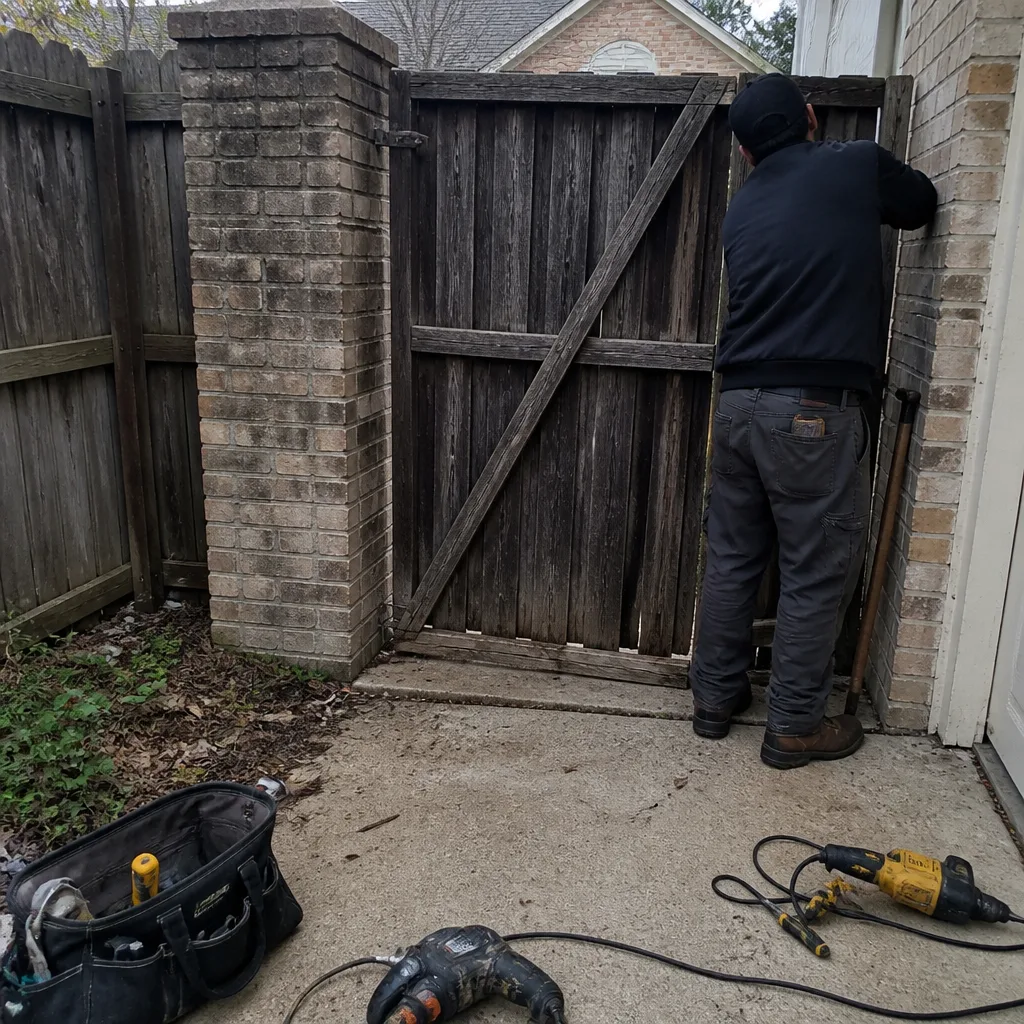 Before
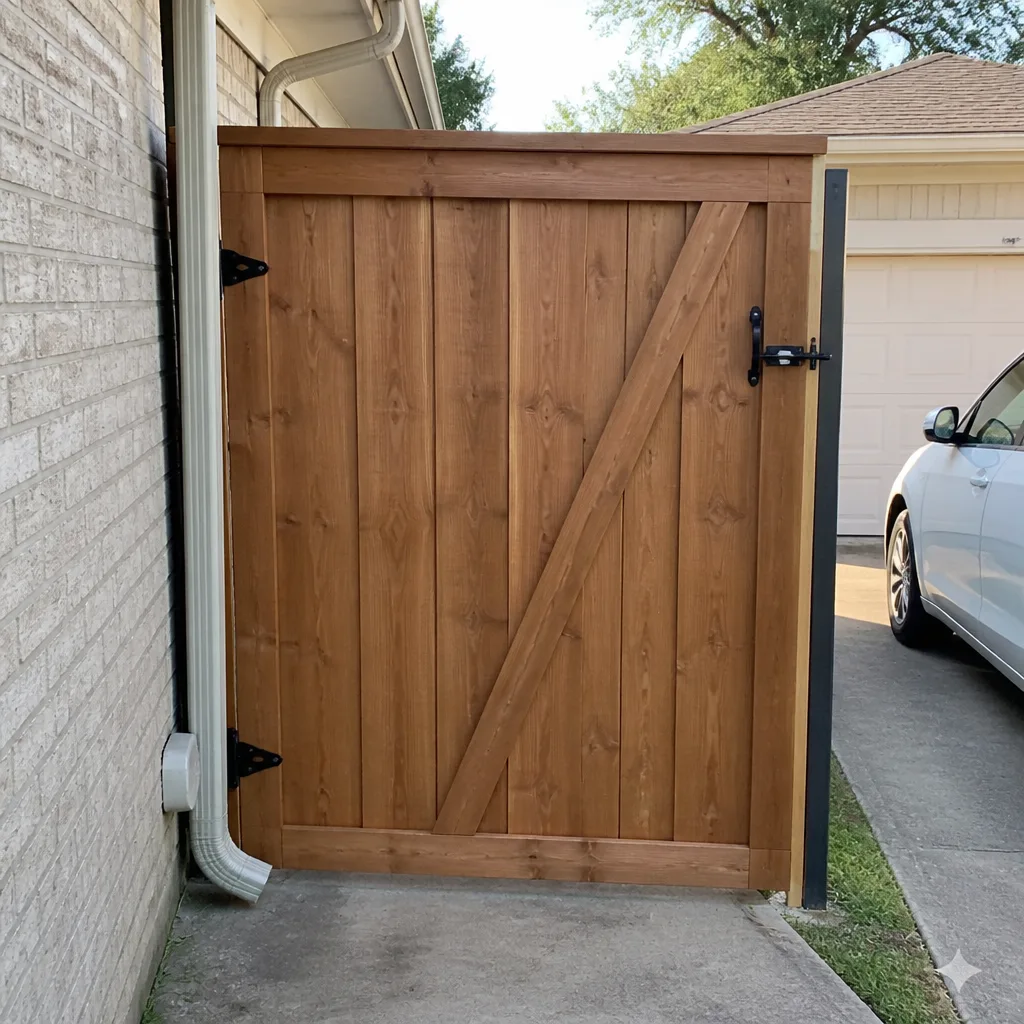 After
AfterGate Repair Maintenance Checklist for Euless Homeowners
A driveway gate in Euless works harder than most homeowners realize. Between the North Texas heat, the spring storm season, and the fine clay soil that shifts with every wet-dry cycle, a gate that was perfectly hung five years ago can be noticeably out of alignment today. Most gate failures we see are not sudden breakdowns. They are slow-motion problems: a hinge wearing down a quarter-inch at a time, a motor working a little harder each month, a track filling with the same fine grit that finds its way into every Euless garage. This guide is a complete maintenance checklist, written from 42 years of gate work, so you know what to check, when to check it, and when to pick up the phone.
Quick Answer
A homeowner in Euless should inspect their gate twice a year, in spring and fall, focusing on hinges, track cleanliness, opener force settings, safety sensors, and the condition of welds and powder coat. Most repairs cost between $150 and $450 when caught early, but a neglected hinge or opener can push that number past $1,200. The single most valuable habit is a five-minute visual and listen check once a month: watch the gate travel, listen for new noises, and feel for vibration. That habit catches 80% of problems before they become emergencies.
Table of Contents
- The Euless Seasonal Maintenance Schedule
- Hinges, Hardware, and What Euless Dust Does to Them
- Track, Rollers, and the Fine Grit Problem
- Opener Force Settings and Why They Drift
- Safety Sensors and Photo Eyes: Testing What Protects Your Family
- Welds, Powder Coat, and the Texas Sun
- The Five-Minute Monthly Listen Check
- What Gate Maintenance and Repair Costs in Euless
The Euless Seasonal Maintenance Schedule
Euless does not have gentle seasons. Summer pushes triple digits for weeks at a stretch, and the spring brings thunderstorms that can drop two inches of rain in an afternoon. Both conditions stress a gate differently, which is why we tell every Euless homeowner we serve to follow a twice-yearly rhythm: once in late March, once in late September. The March pass gets the gate ready for storm season. The September pass gets it ready for the heat-and-cool cycles that work metal loose over winter.
Here is the complete seasonal checklist we recommend, in order:
- Wash the gate and track. Use a garden hose and a soft brush. The goal is to remove accumulated dust, pollen, and the clay dust that blows in from open fields around the city. A clean gate is easier to inspect.
- Check every hinge bolt and bracket bolt with a wrench. A bolt that has backed out even a quarter turn will cause the gate to sag, and sag transfers load to the opener motor, shortening its life.
- Inspect the track for dents, rust blooms, or debris packed into the wheel channel. In Euless, the biggest track problem is not rust; it is packed dirt that hardens like concrete after a dry spell.
- Test the opener’s auto-reverse function. Place a 2×4 or a full water jug in the gate’s path and close it. The gate should reverse before it crushes the object. If it does not, turn the opener off and call a professional same day.
- Lubricate hinges, rollers, and the drive chain or screw with a dry lithium or silicone spray. Never use WD-40 on a gate; it is a solvent that strips existing lubricant and attracts dust.
- Stand at the keypad and watch the gate complete one full open and close cycle. Look for hesitation, stuttering, sag at the free end, or any sound that was not there in March.
Each of these steps takes a few minutes. The entire pass should take under an hour. And if anything in steps two through six gives you pause, that is the moment a gate professional should hear from you, not six months later, when the gate has failed at 7:00 a.m. on a workday.
Hinges, Hardware, and What Euless Dust Does to Them
Hinges carry the entire weight of the gate leaf, and in Euless they carry it through temperature swings that can exceed 50 degrees in a single week. Metal expands and contracts with every swing in temperature. Over twenty or thirty years, that cycle works hinge pins loose, elongates bolt holes, and compresses washers. We have replaced hinges on Euless gates that were original to homes built in the 1980s, and the difference between the old hinge and the new one is often a full eighth of an inch of slop. The gate was not badly built. It was simply never re-tightened or re-bushed, and the slop eventually tore up the opener’s gear train.
Signs a hinge is failing:
- The free end of the gate sits visibly lower than the hinge end. Stand behind the gate and sight down the top rail. Any sag of more than half an inch means hinge wear.
- The gate scrapes the ground on the free end but not the hinge end. Euless clay soil is expansive; it heaves in wet springs and settles in dry summers, so seasonal contact is normal. Constant contact is not.
- You hear a creak or a metallic groan when the gate starts moving. Hinges should be quiet. Noise means metal-on-metal contact without lubrication, which is the first stage of hinge failure.
- A hinge bolt turns when you put a wrench on it and try to snug it. A properly installed hinge bolt should be tight and stationary. If it turns, the hole it sits in has enlarged.
Lubricating hinges is a maintenance task any homeowner can do. Replacing a hinge on a heavy steel gate is not. The gate must be supported safely before any hinge is removed, because a gate that shifts during the job can crush a hand or pin a leg. If you have sag, noise you cannot quiet with lubrication, or a bolt that spins, call a gate repair professional in Euless and have the hinge replaced before the opener absorbs the next season of stress.
Track, Rollers, and the Fine Grit Problem
Sliding gates are common on Euless properties, especially on wider driveways where a swing gate would take up too much arc. A slide gate depends on a level track, clean wheels, and a clear channel. The problem in our part of Texas is not just dust; it is dust fine enough to work into sealed bearings. The clay and limestone powder that blows around Euless is abrasive. Once it gets into a roller bearing, the bearing begins to grind itself down from the inside. You will not see it happening. You will hear it first as a roughness in the gate’s travel, and later as a rhythmic thump when a flat spot develops on the roller.
Track maintenance is straightforward and should be part of every seasonal pass:
- Clear the track channel. Use a flat screwdriver or a stiff putty knife to scrape out packed dirt. On a long track, this is a ten-minute job.
- Check the track for level. A track that has settled at one end will make the gate labor in one direction and coast in the other. Use a four-foot level on the track, not the gate.
- Spin each roller by hand (with the gate in the open position and the opener disengaged). A good roller spins freely and quietly. One that feels gritty or has play in the bearing is done.
- Look at the track’s wear surface. A shine is normal. A groove is not. A groove means a roller has stopped rolling and is now sliding, and that will only get worse.
Roller replacement on a heavy sliding gate is a job for someone who has done it before. The gate must be blocked and braced, and the new rollers must be rated for the leaf’s actual weight, not just its nominal size. We regularly service BFT and Linear slide-gate openers across Euless, and the same failure pattern appears again and again: a $40 roller was ignored until it cost the homeowner an $800 motor replacement. The roller is always cheaper.
Opener Force Settings and Why They Drift
Every modern gate opener has a force setting: the amount of resistance the motor will push against before it reverses. Set too low, the gate stops halfway on a windy day. Set too high, the gate will keep pushing against an obstruction, which is how children get hurt and how motors burn out. The correct force setting is just enough to move the gate reliably on a calm day, with a reasonable margin for wind.
Force settings drift for two reasons in Euless. First, temperature changes affect the gate’s resistance: a gate that was balanced at 75 degrees will be stiffer at 40 degrees and looser at 100. Second, as hinges and rollers wear, the gate requires more force to move, and the opener compensates if it has an auto-adjust feature, or the owner compensates manually by turning up the force dial. That works right up until the gate encounters a real obstruction and does not reverse.
Twice a year, check the force this way:
- Disengage the opener and push the gate by hand. It should move smoothly through its full travel. If you feel resistance or sticky spots, the gate has a mechanical problem, and no force setting will fix it.
- Re-engage the opener and run the gate. It should travel at a steady speed without slowing in the middle.
- Perform the auto-reverse test described in the seasonal section. If the gate fails to reverse, lower the force setting if your opener allows it, or call a technician who is trained on your specific brand.
Viking and Ghost Controls openers, which we service regularly in Euless, have different force adjustment procedures, and the wrong setting can cause the opener to fault out or lose its travel limits. If you are not certain what your opener’s force adjustment should be, leave it alone and ask a pro. A force check takes ten minutes on a service call, and it is included in an Ironworks Gate Co. home seasonal tune-up.
Safety Sensors and Photo Eyes: Testing What Protects Your Family
Since the late 1990s, federal safety standards have required automatic gates to have at least one external entrapment protection device: a photo eye, a contact edge, or both. The photo eye projects an invisible beam across the gate opening. Break the beam while the gate is closing, and the gate must stop and reverse. On a slide gate in Euless, where kids ride bikes and dogs chase balls, the photo eye is the difference between a gate that closes and a gate that hurts someone.
Photo eyes fail in predictable ways. Direct sun at the wrong angle can wash out the beam. Dust buildup on the lens can reduce the signal until the opener no longer sees it. A gate that vibrates can knock a photo eye slightly out of alignment, which makes the opener think the beam is always broken, and the gate will refuse to close at all. In Euless, where west-facing gates catch the full force of the afternoon sun, sun washout is a common cause of intermittent gate failures.
Test the photo eye every month, not just seasonally:
- Start the gate closing.
- Wave your hand through the photo eye beam.
- The gate should reverse immediately and completely.
- If it does not, clean both lens faces with a soft dry cloth. If it still fails, call for service the same day.
Do not disable a photo eye to keep a troublesome gate closing. It is the single most dangerous shortcut a homeowner can take on a gate. Every gate repair professional in Euless has stories about photo eyes that were bypassed years before and forgotten, and some of those stories end with a child in an emergency room.
Welds, Powder Coat, and the Texas Sun
Steel gates in North Texas are usually powder coated, which is a baked-on finish that protects the steel underneath. Powder coat is tough, but it is not indestructible. A chip at a weld joint, a scratch from a mower, or a spot where the gate rubs a post will expose bare steel, and the humidity that follows Euless spring storms will do the rest. Surface rust at a weld is normal over a thirty-year gate life. Pitting rust, flaking rust, or rust that has eaten into the metal is a structural concern.
Walk the gate’s perimeter twice a year and look closely at:
- Every weld joint. Welds are stress concentrators, and stress causes hairline cracks in powder coat that let moisture reach the steel. A weld that shows orange staining is worth a closer look.
- The bottom rail. This is where splash from rain and irrigation hits. Grass clippings and soil hold moisture against the metal and accelerate rust.
- Anywhere two pieces of metal touch. Gate corners, picket intersections, and latch plates are all classic rust-start points.
- The post bases. Posts rust from the inside out when water collects at the base. A rust stain streaking down from the post cap is a signal that water has been standing inside.
- A new sound. Gates make some noise. A well-maintained gate makes a smooth hum or a soft rumble. A clank, a squeal, a grind, a rattle, or a thump that was not there last month is a mechanical voice telling you something is wrong.
- A change in speed. A gate that slows at the same point every cycle, or takes longer to open now than it did in June, is fighting something: wind, a failing capacitor, a dragging wheel, a hinge going dry.
- Vibration. Put your hand on the gate post while it runs. A healthy gate transmits a low, steady vibration. A shaking, pulsing vibration means something is out of balance or a roller has a flat spot.
- Hesitation at start. A gate that sits for a second or two after the opener engages before it starts moving is often a capacitor losing its ability to hold a charge. It will work until the morning it does not, which is usually the coldest morning of the year.
- Anything touching that should not touch. Wires hanging down, vines wrapped around the track, a tree limb brushing the gate top, the gate rubbing a post on the way past. All of these are fixable in minutes when caught early.
- Seasonal tune-up: $89 to $150, depending on gate size. Includes lubrication, hinge tightening, force check, and safety sensor test.
- Hinge replacement (one hinge, standard steel gate): $180 to $350, including the hinge, welding if required, and realignment.
- Roller replacement (sliding gate, one roller): $150 to $275, including the roller and track cleaning.
- Photo eye replacement and alignment: $120 to $250 for most brands.
- Opener capacitor replacement: $125 to $225, including the part and a force re-check.
- Weld repair (cracked joint): $150 to $400, depending on location, access, and the amount of grinding and repainting involved.
- Complete opener replacement: $1,400 to $2,800 installed, depending on brand and gate weight. BFT and Linear openers sit at the higher end of that range in our Euless work.
For small chips and scratches, a touch-up of matched enamel, applied to clean, dry metal, is adequate maintenance. For cracking welds, deep rust, or a gate that has begun to sag at a weld point, do not attempt a homeowner fix. A weld repair on a load-bearing joint requires a welder who knows the gate’s steel thickness, the load path, and the proper rod. Done wrong, a weld can crystallize the surrounding steel and fail suddenly. Done right, it can add twenty years to a gate. We tell Euless homeowners the same thing we would tell our own neighbors: touch up the powder coat yourself, but leave the structural welds to someone who welds for a living.
The Five-Minute Monthly Listen Check
Here is the habit that catches more problems than any other maintenance routine, and it costs nothing. Once a month, stand next to your gate and run it through one full open and close cycle. Do not scroll your phone. Do not walk away. Just stand there, watch, and listen.
What you are looking for, in order of importance:
If this feels like overkill, consider what a gate failure costs in inconvenience alone. The gate usually fails in the open position, which means your driveway is open to the street. Or it fails in the closed position, which means you are parked in the street and calling in late to work. Neither is a good look, and both are preventable with a once-a-month look and listen. Five minutes.
What Gate Maintenance and Repair Costs in Euless
Gate repair pricing in the Euless market is consistent across most established companies, with some variation based on gate size, opener brand, and time of year. Here is a breakdown of common jobs and their typical ranges, based on what we quote day to day:
Those are honest ranges, not teaser prices. The price you are quoted should be the price on the invoice. If you are asked to approve a repair without a firm number, that is a red flag. Every gate job we do in Euless is priced before work starts, and the customer approves it before a single bolt is turned. No variation order, no surprise line items, no “while we were in there” add-ons. The price is the price.
Common Mistakes to Avoid
- Using WD-40 or motor oil on hinges and rollers. Both attract dust, and the dust becomes a grinding paste that destroys hinges faster than no lubrication would. Use a dry spray lubricant made for gate hardware.
- Turning up the opener force to fix a slow gate. The slow gate has a mechanical cause: bad hinges, bad rollers, low voltage, or a failing capacitor. Raising the force masks the problem and creates a safety risk.
- Skipping the auto-reverse test because “it worked last year.” Openers lose calibration gradually. A gate that passed last spring can fail this fall, and the only way to know is to test it.
- Ignoring a sagging gate. Sag is the number one predictor of hinge failure and opener motor burnout. A gate that sags half an inch today will sag two inches in five years, and the repair bill will be four times what it would have been.
- Painting over rust without treating it. Paint traps moisture against the steel and makes the rust worse underneath. Treat the rust first with a rust converter, then prime and paint.
- Replacing an opener without fixing the gate. In Euless we see this constantly: a homeowner replaces a burnt-out opener, and the gate still struggles because the real problem is a hinge or roller that should have been addressed first. A new opener on a bad gate is a waste of money.
- Calling a generalist handyman for automation problems. Gate openers are not garage door openers. They are heavier, more complex, and governed by stricter safety standards. A handyman who does not know the difference between a Viking and a Ghost Controls board can do expensive damage in an afternoon.
When to Call a Professional
A homeowner can handle lubrication, cleaning, visual inspection, and paint touch-up. You should call a professional when the gate sags visibly, when a weld cracks, when the opener makes a sound you have never heard before, when the photo eye fails its monthly test, or when the gate refuses to complete a full cycle. Those are not maintenance items. They are repair items, and the longer they wait, the more they cost.
If you are in Euless and you want a second set of eyes on your gate without any obligation, that is exactly what a free estimate is for. Ironworks Gate Co. offers free estimates in Euless. Call (806) 484-1837 and Victor Salinas or a member of the team will come out, look the gate over, and give you a straight answer about what it needs and what it will cost.
Frequently Asked Questions
Twice a year is the right interval for Euless weather: once in late March before storm season, and once in late September before the fall temperature swings. A seasonal tune-up costs $89 to $150 and includes lubrication, hinge tightening, force adjustment, and safety sensor testing. If you do the monthly listen check yourself, the twice-yearly tune-up covers everything else.
Sagging hinges are the most common repair we see in Euless, followed closely by roller failures on sliding gates. The expansive clay soil and hard temperature swings work hinge bolts loose over time, and the sag that follows eventually destroys the opener motor. A hinge replacement typically runs $180 to $350, which is a fraction of the cost of replacing an opener that burned out because of a hinge nobody fixed.
If the problem is a blown fuse, a tripped breaker, or a misaligned photo eye, a homeowner can often fix it with basic tools. If the problem is a capacitor, a control board, a gear train, or anything involving the opener’s internal wiring, leave it alone. Gate openers carry enough current to cause serious injury, and an incorrect repair can create an unsafe gate that passes a visual check but fails to reverse on a person. If you are not certain, call a pro.
A full gate replacement in Euless, including the gate, posts, opener, and installation, typically runs from $4,500 to $12,000 or more depending on gate size, material, design, and automation requirements. Custom steel gates with full automation sit at the higher end. A new gate should be quoted as a complete job: gate, hardware, opener, safety edges, and labor, with the price agreed before work begins.
We service and repair nine gate-automation brands across Euless and surrounding areas: LiftMaster, FAAC, BFT, Linear, Viking, Ghost Controls, DoorKing, Elite, and Mighty Mule. Whoever installed your opener, the odds are strong that we have the training and parts support to service it correctly on the first visit.
Yes, if the gate is making a new noise, hesitating, sagging, or failing its safety sensor test. Those are early-warning signs that a repair is coming, and catching them early usually keeps the bill under $300. Waiting until the gate stops working often turns a $300 hinge into a $1,500 opener replacement. Call (806) 484-1837 for a free estimate and a straight answer on whether it can wait.
The Bottom Line
A gate is a machine with moving parts, and every machine responds to attention. In Euless, with its heat, its storms, and its shifting clay soil, a gate that is ignored for five years will make itself known at the worst possible moment. A gate that gets a twice-yearly tune-up, a monthly look and listen, and prompt attention to sag, noise, and safety sensor failures will run quietly for decades. Most problems start small and stay cheap when caught early. The gate you check is the gate that lasts. And when something is beyond a homeowner’s wrench, a Euless gate professional with training on your opener brand is one call away.
Written by Victor Salinas, Owner at Ironworks Gate Co., serving Euless since 2013.