
Last updated August 25, 2026
Free on-site gate assessment - hinges, posts, and your LiftMaster or Nice gate operator checked before anything is quoted
The assessment is free and the quote is the invoice.
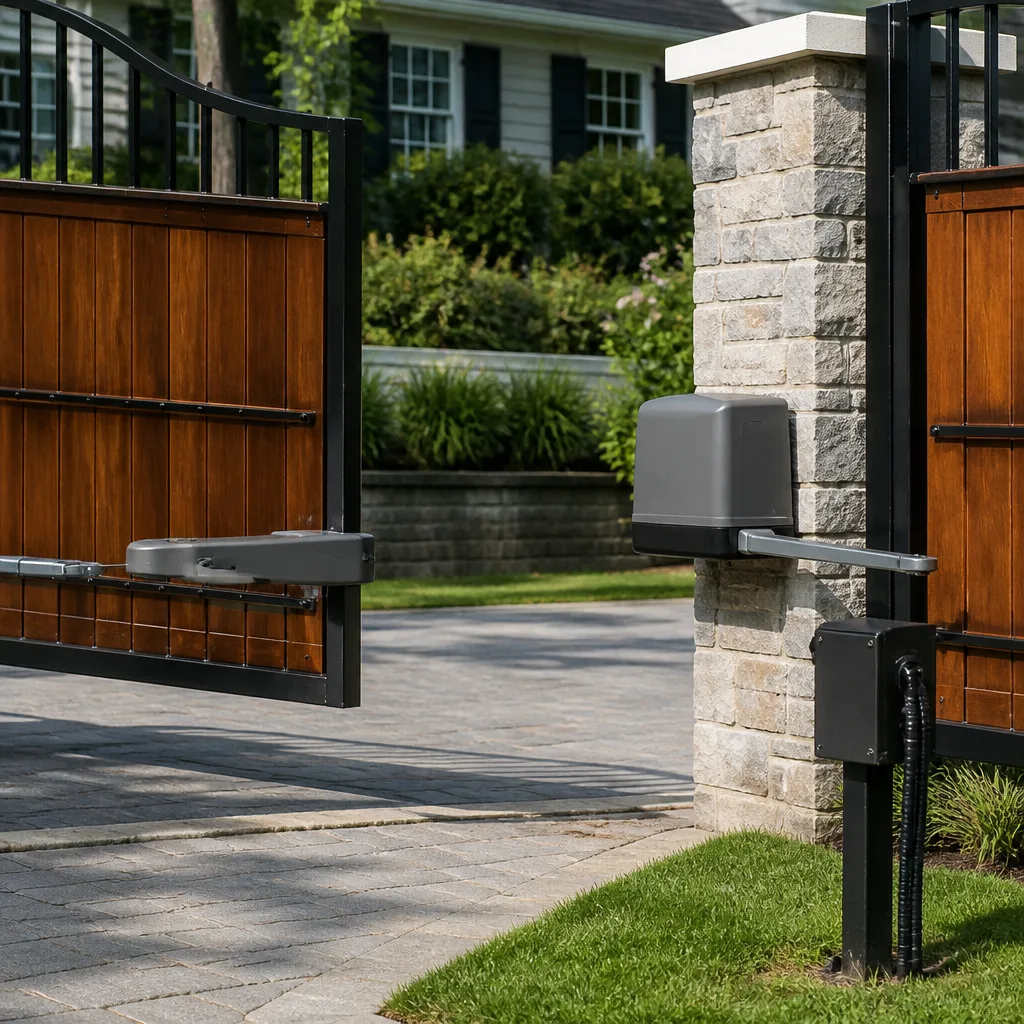
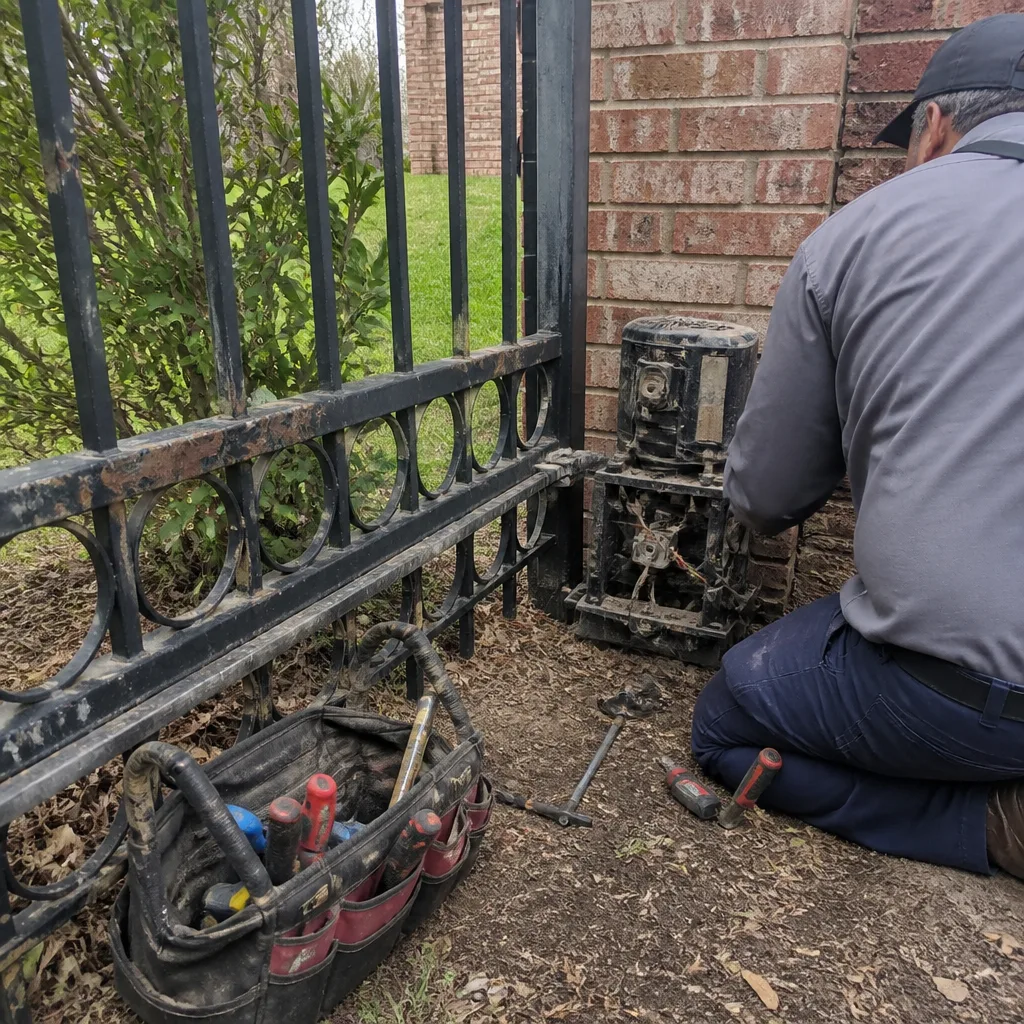 Before
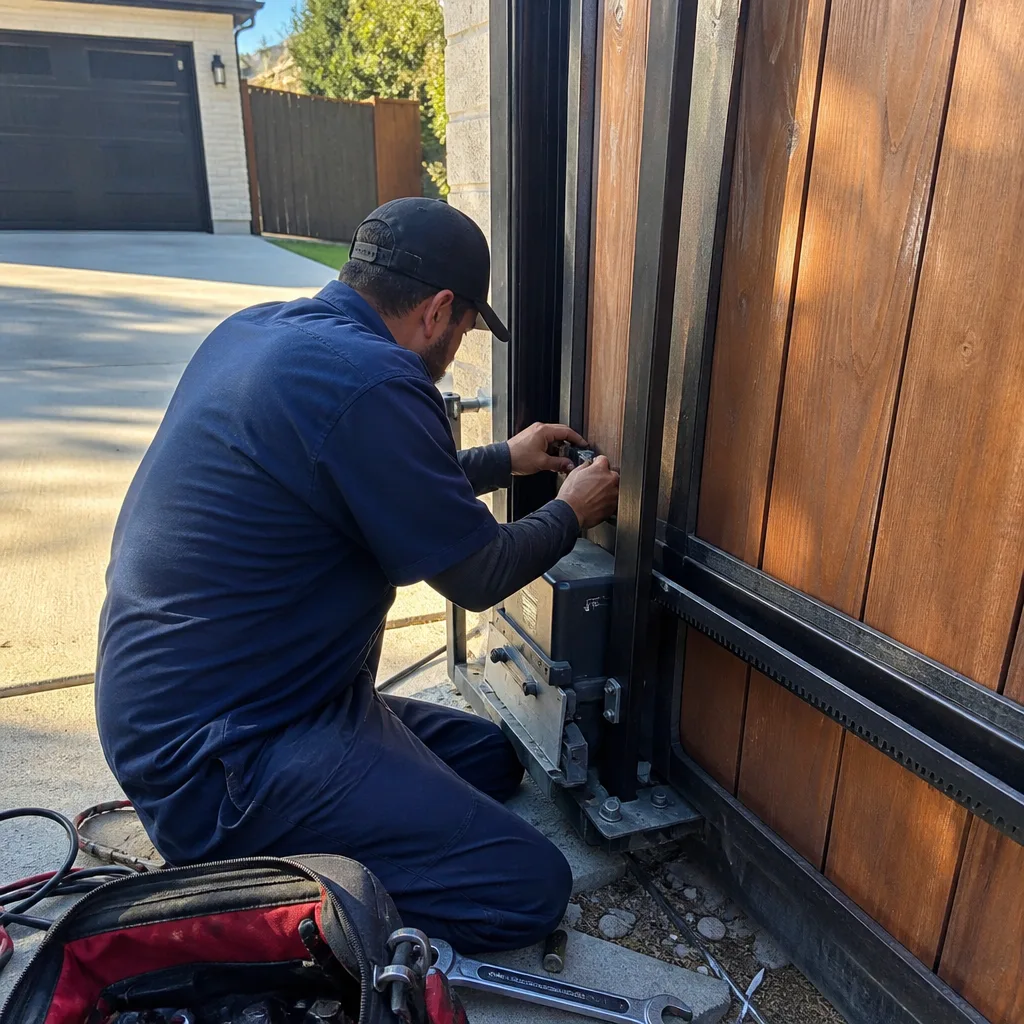 After
After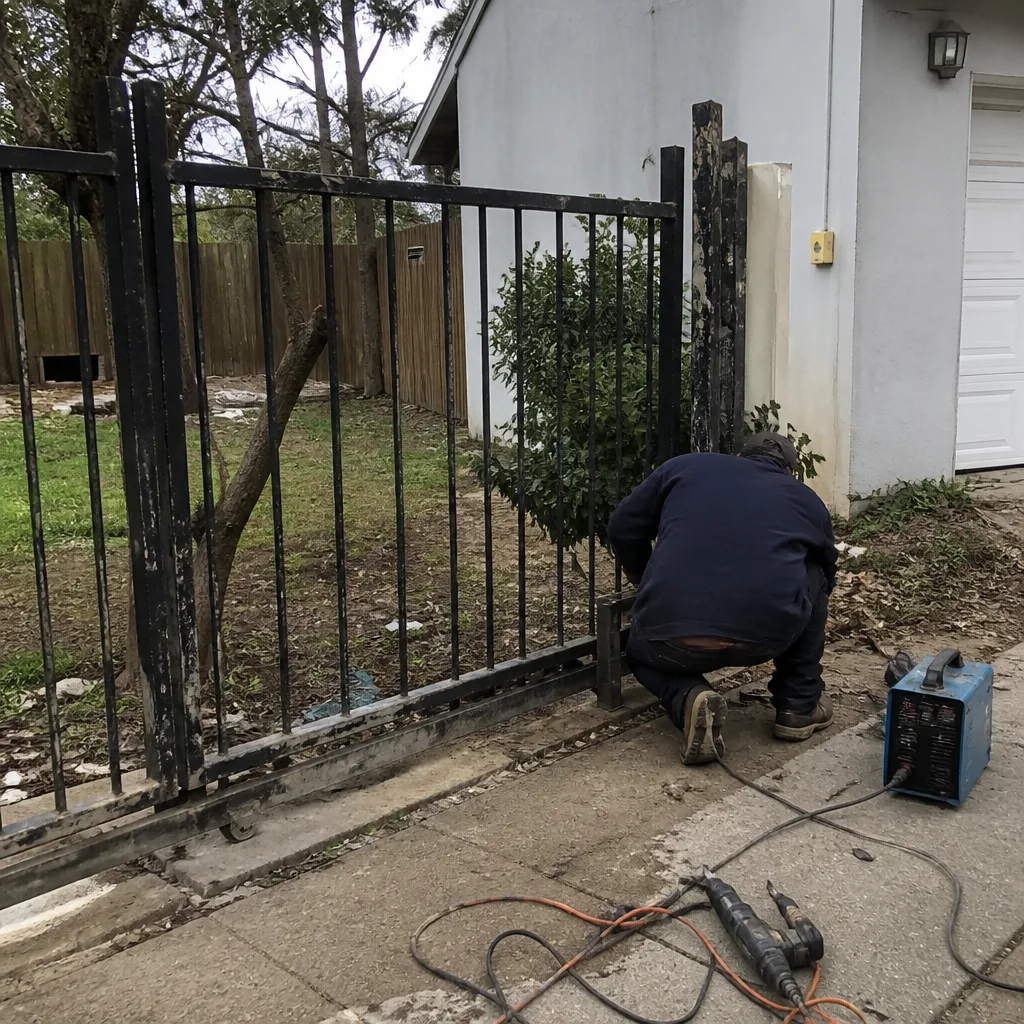 Before
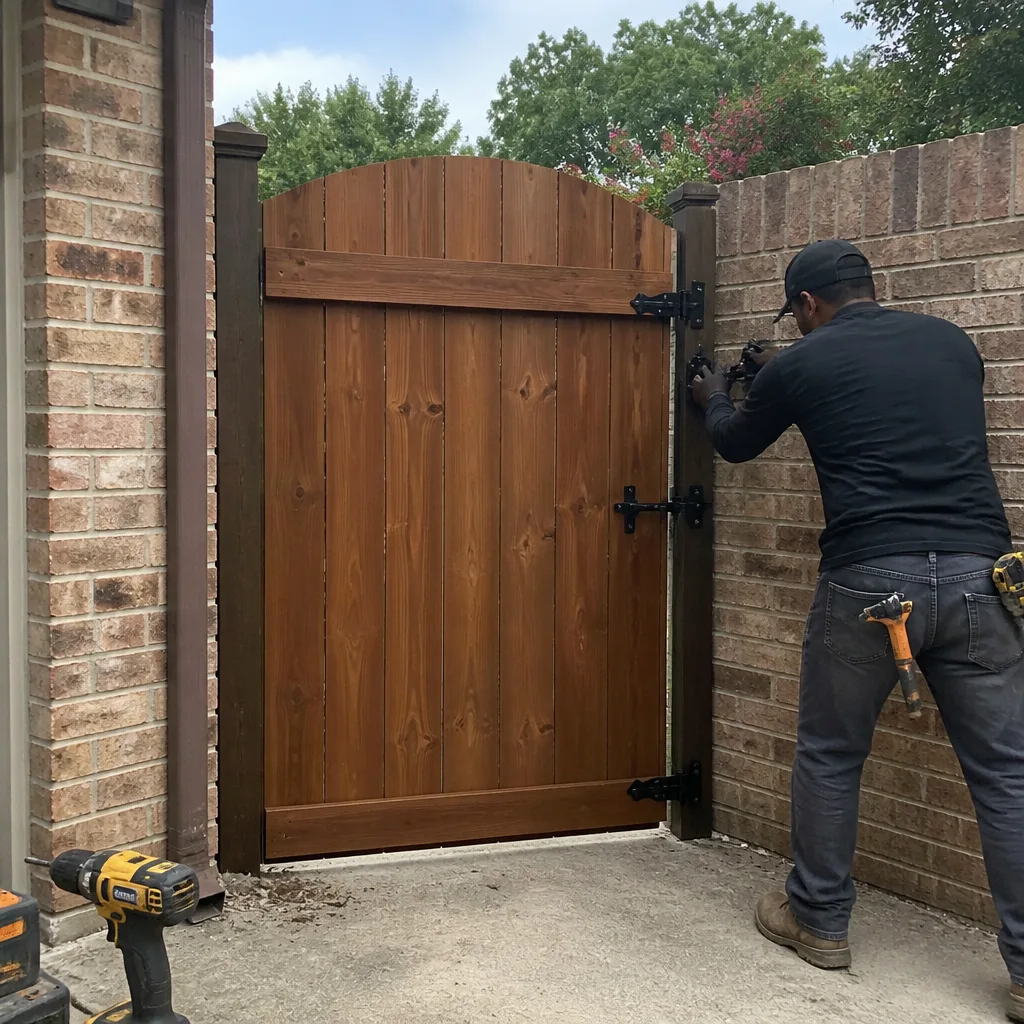 After
After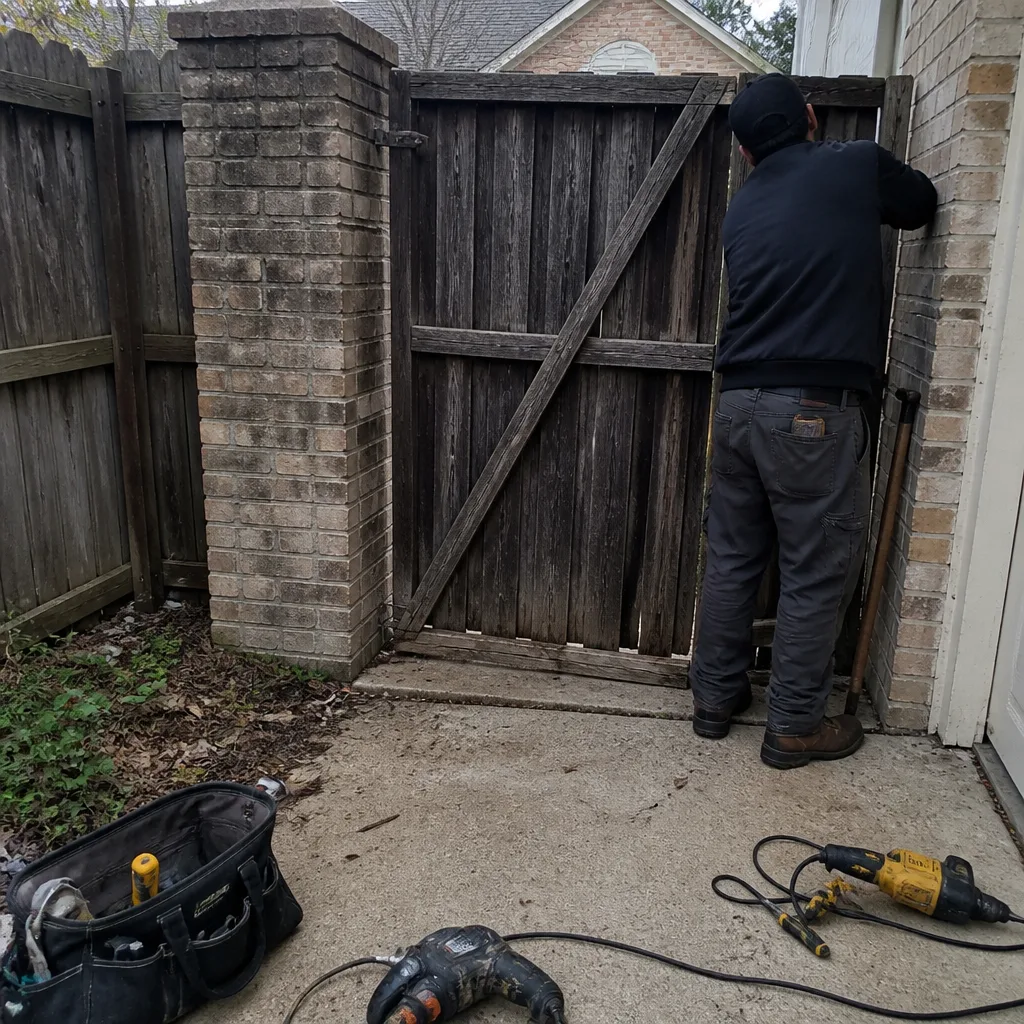 Before
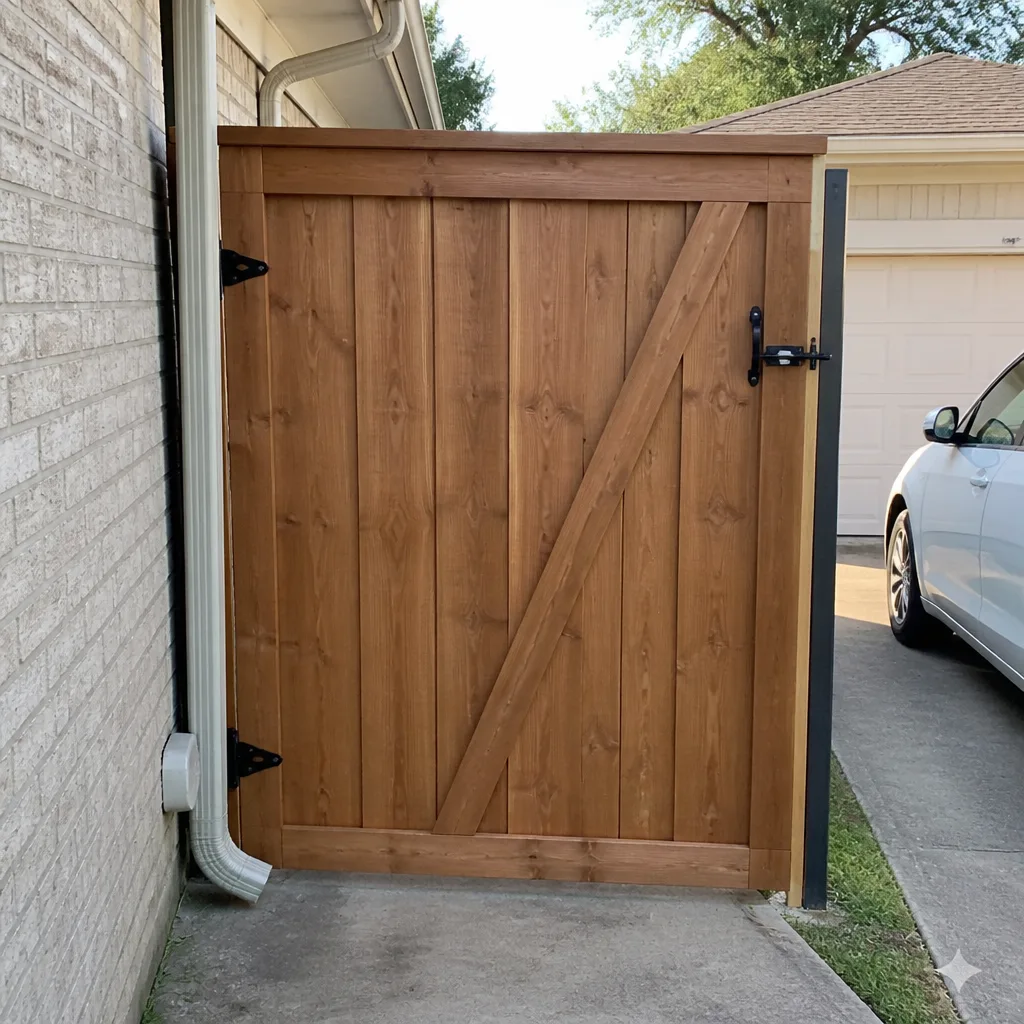 After
AfterSeasonal Gate Repair Care for Euless: Year-Round Homeowner’s Guide
Most gate failures in Euless don’t happen during the storm that breaks them. They happen three weeks later, on a quiet Tuesday afternoon, when a rust-weakened hinge finally gives way or a heat-fatigued capacitor stops sending power to the opener. In our 42 years of gate work, we’ve noticed something that surprises most homeowners: the gate that gets inspected twice a year almost never fails, while the gate that only gets looked at when something breaks tends to break every eighteen months like clockwork. This guide walks you through what the Euless climate does to your gate month by month, what you can do yourself, and what genuinely needs a trained hand. By the end, you’ll know what to watch for, when to act, and what it should cost.
Quick Answer
Seasonal gate care in Euless means inspecting hinges and posts for shifting clay soil each spring, tightening and lubricating every moving part before summer heat expands the metal, clearing leaf debris from slide tracks in the fall, and checking opener wiring and battery backup ahead of winter storms. A fifteen-minute seasonal walkaround twice a year will prevent most breakdowns that would otherwise cost $280 to $900 to repair.
Table of Contents
- How the Euless Climate Affects Your Gate
- Spring Gate Maintenance in Euless: The Post-Winter Checklist
- Summer Heat and Gate Components: What Expands, What Fails
- Fall Gate Preparation: Before the First Cold Front
- Winter Gate Care in Euless: Storms, Freezes, and Power Outages
- What a $89 Seasonal Tune-Up Covers (and Why It’s Worth It)
- What You Can Do Yourself vs. What Needs a Gate Professional
- Common Mistakes to Avoid
- When to Call a Professional
- Frequently Asked Questions
- The Bottom Line
How the Euless Climate Affects Your Gate
Euless sits in a part of North Texas that gives gates a harder life than most homeowners realize. The soil here is what engineers call “expansive clay”: it swells when wet and shrinks when dry. That movement is the single biggest reason gate posts lean, gates drag on the ground, and latch plates stop aligning in Euless. We’ve seen posts that were perfectly plumb in April drift a full inch out of vertical after a dry August. The gate doesn’t know it moved; the gate just starts sagging and catching.
Then there’s the temperature swing. A Euless summer pushes above 100 degrees on the metal surface of a dark gate, and a January night can dip below freezing. That’s a 70-degree range acting on steel, aluminum, and electrical components. Metal expands in the heat and contracts in the cold. Gate opener capacitors, the electrical parts that store the charge to start the motor, age faster in sustained heat. Battery backup units lose capacity when they sit in a hot metal control box all summer.
Rainfall matters too. Euless gets about 38 inches of rain a year, but it doesn’t arrive evenly. It comes in spring downpours and fall storm bands. That means periods where water pools around gate posts, followed by long dry spells where the clay contracts and hardens. Each cycle works posts a little looser in their footings. The good news is that most of the damage from Euless weather is gradual. A seasonal walkaround catches it early, when a bolt tightening or a limit-switch adjustment fixes the problem for under $100 instead of letting it become a $700 repair.
Spring Gate Maintenance in Euless: The Post-Winter Checklist
Spring is the right time to work on a gate in Euless. The ground has finished its winter freeze-thaw cycle, but the brutal summer heat hasn’t arrived yet. Everything you catch now saves you from dealing with it in July or August when a gate failure means standing in the driveway at 102 degrees.
Here’s the checklist we run through with homeowners every spring:
- Check the gate’s level and clearance. Open the gate halfway and look at the gap between the bottom of the gate and the ground. If the gap is smaller on one side than the other, the gate or the post has shifted. A dragging gate wears out wheels, strains the opener motor, and destroys hinges faster than anything else.
- Inspect every hinge and weld point. Look for rust bloom (that orange dust that appears before actual rust), hairline cracks at weld joints, and any bolt that has backed out. Use a wrench on accessible bolts; if they turn easily, they need tightening.
- Clean and lubricate moving parts. A wire brush removes old grease and surface rust from hinge pins, roller wheels, and slide-track hardware. Then apply a lithium-based grease to hinges and a dry silicone spray to slide tracks and wheels. Never use WD-40 as a gate lubricant; it’s a solvent that strips the grease you need.
- Test the safety reverse. Place a cardboard box in the gate’s path and close it. The gate should stop and reverse before crushing the box. If it doesn’t, the safety edges or the photo eyes need service. This is a safety item, not a convenience item.
- Check the opener’s force settings. Open and close the gate while watching how hard it moves. If it slams at the end of travel or strains against the stops, the limit switches need adjustment. If it stalls halfway, the capacitor or the drive belt may be failing.
- Walk the perimeter of the property. Look for tree branches that have grown into the gate’s swing path, shrubs crowding the posts, or irrigation heads spraying water directly onto the gate frame. Irrigation overspray is a rust accelerator, and we see it constantly in Euless yards.
A thorough spring inspection takes about 20 minutes. If you find more than two items that need repair, or if anything involves the motor or the electrical controls, that’s the point to have a gate professional look at it. Ironworks Gate Co. offers an $89 Seasonal Tune-Up that covers the full checklist and adjusts what needs adjusting, with the price settled before any work begins on anything beyond the tune-up.
Summer Heat and Gate Components: What Expands, What Fails
Euless summers test gates in ways that surprised us early in our 42 years and still catch homeowners off guard. The failure we see most often in July and August isn’t a broken hinge; it’s a control board cooked inside a metal enclosure. The enclosure acts like an oven. On a 100-degree day, the inside of a dark-painted gate opener box can exceed 140 degrees. Electronics rated for 120 degrees start failing slowly: intermittent operation first, then a dead opener on the hottest afternoon of the year.
Here’s what summer heat specifically does to each component:
- Capacitors: The most common heat-related failure. A capacitor stores the burst of energy that starts the motor. Heat degrades the dielectric material inside. When it fails, the opener hums but doesn’t move, or the gate moves slowly and then stops. Capacitor replacement runs $90 to $180 on most residential gate openers.
- Metal expansion: A steel gate can grow a quarter-inch in length between February and August. If the gate was installed tight against the latch post in winter, that quarter-inch makes it bind in summer. Gates that worked perfectly in May suddenly won’t close all the way in August. The fix is usually a limit-switch adjustment, not a new gate.
- Battery backup units: These sit in the same hot enclosure as the control board. Heat shortens their service life from a typical five years to two or three. When the battery fails, your gate still works on normal power, but it won’t operate during an outage. In Euless summer storm season, that’s exactly when you need it.
- Lubricant breakdown: The grease on hinge pins thins in the heat and drips out. By late August, hinge pins that were greased in March are running dry. Dry hinges wear faster and put more strain on the opener motor.
- UV exposure on plastic components: Keypads, photo-eye housings, and wire insulation all degrade under sustained North Texas sun. Cracks in the photo-eye housing let moisture in, and moisture plus electronics means erratic operation.
One summer-specific recommendation we give every Euless homeowner: check the opener enclosure for shade. If your gate opener box faces west and takes direct afternoon sun, consider a simple shade panel or relocating the box. It’s a small change that can double the life of the electronics inside.
Fall Gate Preparation: Before the First Cold Front
Fall is the best time in Euless for gate work, because the weather is comfortable and there’s still time to fix problems before winter storms arrive. The first real cold front usually hits in late October or early November, and after that, working on a gate in the wind and rain gets miserable fast.
Here’s the fall checklist we recommend:
- Clear the slide track completely. If you have a sliding gate, this is the most important fall task. Leaves, twigs, acorns, and the occasional dead grass clump work their way into the track by October. Left in place, they cause the gate to bind, jump the track, or wear flat spots on the wheels. Clear the track by hand, then use a leaf blower to get the fines out of the channel.
- Check and tighten the chain or belt tension. Slide-gate chains stretch over time, especially through hot summers. A loose chain slaps and jerks, putting wear on both the sprockets and the opener. The chain should have about a half-inch of play at the midpoint. Tightening is usually a two-wrench job on the tensioner bolts.
- Inspect the photo eyes and safety edges. Test the photo eyes by blocking the beam with a piece of cardboard while the gate closes. Test the safety edges by pressing on them while the gate moves. Both tests should stop and reverse the gate. Replace dead photo-eye batteries and clean the lenses with a dry cloth.
- Look for new rust before it spreads. Fall’s cooler, damper weather accelerates rust that started in summer. Wire-brush any rust bloom, apply a rust converter, and touch up with a direct-to-metal paint. A small rust spot caught in October is a $10 fix; a rusted-through frame rail caught in March is a welding job.
- Service the keypad. Keypads get used more in fall and winter as families come and go in the dark. If your keypad isn’t responding reliably, check the battery first. If it’s a hardwired keypad, look for cracked or brittle wiring at the base.
- Check drainage around the posts. After the first fall rains, look for standing water around the base of the gate posts. Water pooling against a post accelerates rust at the ground line, which is where most post failures start. If water pools, improve the drainage or have the post base sealed.
Fall is also the right season to schedule a professional inspection if you skipped spring. The gate professionals at Ironworks Gate Co. stay busy through October and November for exactly this reason: Euless homeowners want the gate ready before winter.
Winter Gate Care in Euless: Storms, Freezes, and Power Outages
Winter in Euless isn’t as hard on gates as a Minnesota winter, but it has its own specific dangers. The biggest one is freeze-thaw cycling. When water gets into hairline cracks in the gate frame, into hinge pin housings, or into the concrete around the posts, it expands when it freezes. Each freeze cycle widens the crack slightly. After enough cycles, a hairline crack becomes a structural break.
Here’s what Euless winter weather does and what to do about it:
- Ice loading: A quarter-inch of ice on a 16-foot steel gate can add 150 pounds or more, distributed across the frame. Opener motors sized for the gate’s normal weight strain under the added load. If an ice storm is forecast, leave the gate open or place it in manual mode so the opener doesn’t fight the ice. This one step prevents most winter opener burnout.
- Cold-contraction binding: The same gate that expanded in summer shrinks in winter. A gate that fit fine in August may rattle or feel loose in January. More importantly, latch alignment shifts slightly. If the latch is tight to engage, adjust the striker plate rather than forcing the gate.
- Power outages: Winter storm outages in Euless tend to last longer than summer outages. A working battery backup system keeps the gate operating for 20 to 50 cycles depending on the unit. If your battery is older than three years, have it tested before storm season. A dead battery during an outage means the gate is stuck closed, and if it’s your only vehicle access, that’s a real problem.
- Concrete shrinkage: Cold weather doesn’t just affect the metal. The concrete footings around gate posts contract slightly in sustained cold. In most Euless soils, the effect is minor, but on gates with shallow footings, winter contraction can leave the post just loose enough to wobble in high wind.
- Wind loading: North Texas winter storms bring sustained winds that push against the flat surface of a gate. A properly installed gate and opener can handle normal wind loads, but a gate with worn hinges or a loose post will flex visibly in a storm. That flexing fatigues the metal and shortens the gate’s life.
The winter rule we give every homeowner in Euless is simple: if the gate is fighting the opener, the opener will lose eventually. Don’t force a frozen, iced, or wind-strained gate through its cycle. Put it in manual mode or leave it open until the conditions pass, then call a professional if it doesn’t operate smoothly once the weather clears.
What a $89 Seasonal Tune-Up Covers (and Why It’s Worth It)
Every gate manufacturer recommends at least one maintenance visit per year, and most recommend two. The reason is practical: gate openers are electric motors, and electric motors with dirty contacts, dry bearings, and misaligned limits work harder and die earlier. A gate professional can catch problems in 30 minutes that a homeowner will miss for months.
Ironworks Gate Co. offers a $89 Seasonal Tune-Up for Euless homeowners. Here’s what it includes:
- A full inspection of the gate frame, hinges, welds, and posts, with a written condition report.
- Lubrication of all hinge pins, roller wheels, and slide-track hardware.
- Tightening of accessible bolts, mounting hardware, and tensioner adjustments.
- Limit-switch and force-setting adjustment so the gate opens and closes smoothly.
- Safety-edge and photo-eye testing and adjustment.
- Opener control-board diagnostic on all nine major brands we service, including BFT, Linear, Viking, and Ghost Controls.
- A check of the battery backup system where installed.
The tune-up price is $89, period. If the technician finds something beyond the tune-up that needs repair, you get an upfront price before any additional work happens, and you can decline it with no pressure. That’s the way it should work. The $89 tune-up also comes with the same 90-Day Done Right Promise that covers every job we complete. If something isn’t right, we come back and make it right. No paperwork, no arguing.
We also offer a Free Second Opinion on Any Written Estimate and $50 Off Any Repair Over $250, so if you’ve had another company quote a repair, you can see what we’d charge before you spend a dollar. And we maintain a permanent 5% Senior and Veteran discount on all work.
What You Can Do Yourself vs. What Needs a Gate Professional
We’re often asked what a homeowner can safely do on their own gate. The honest answer is: more than most people think, but less than YouTube suggests. Here’s the breakdown, based on 42 years of seeing what works and what sends someone to the emergency room.
Safe for most homeowners:
- Visual inspection. Walking the gate, looking for rust, checking bolt tightness, and watching the gate move through a full cycle. This requires no tools and no risk.
- Lubrication. Applying lithium grease to hinge pins and silicone spray to slide tracks. Keep hands and clothing clear of moving parts.
- Leaf and debris clearing. Keeping the slide track clean, trimming vegetation away from the posts, and clearing dirt from the gate’s path.
- Keypad battery replacement. Most residential keypads use standard 9-volt or AA batteries. This is a five-minute job.
- Testing safety features. Running the cardboard-box test on photo eyes and safety edges. Testing is the safest thing you can do.
Leave to a professional:
- Torsion springs on spring-loaded gates. These springs hold hundreds of pounds of tension. If one lets go while you’re adjusting it, the injury is severe. This is not a DIY job.
- Anything involving the gate opener motor, control board, or wiring. Gate openers run on mains voltage. The control board is the brain of the system, and a miswired board is an expensive mistake. We service BFT, Linear, Viking, Ghost Controls, and five other major brands, and the correct diagnosis on the first visit saves you money versus guessing.
- Post replacement or resetting. When a post shifts in the Euless clay, the fix involves digging the footing, resetting the post, and often pouring new concrete. Do it wrong and the post shifts again in six months.
- Weld repairs. Structural welds on gate frames and hinges need a certified welder. A bad weld can fail catastrophically, and a falling gate section is heavier than most people realize.
- Opener replacement or new installation. This isn’t just bolting a motor on. It’s proper mounting, force-setting, safety-edge integration, and getting the travel limits right. A badly installed opener destroys the gate it’s attached to.
If you’re not sure which category your issue falls into, call (806) 484-1837 and describe what you’re seeing. A live person answers, 24 hours a day. We’ll tell you honestly whether it’s something you can handle or something that needs a truck roll.
Common Mistakes to Avoid
- Lubricating with WD-40. WD-40 is a solvent, not a lubricant. It strips the grease from hinge pins and leaves them running dry, which accelerates wear. Use lithium grease on hinges and silicone spray on tracks and chains.
- Ignoring a dragging gate. A gate that scrapes the ground is telling you something: the post shifted, the hinges wore, or the gate sagged. Every month you ignore it, the repair costs more. A dragging gate that could have been fixed with a $40 hinge replacement becomes a $600 post reset.
- Forcing the gate through ice. When a Euless ice storm hits and the gate won’t move, the worst thing you can do is press the opener button repeatedly. The motor strains, the belt or chain slips, and the control board overheats. Put the gate in manual mode and wait for the thaw.
- Painting over rust without treating it. Paint doesn’t stop rust; it just hides it while the rust eats through the metal underneath. Wire-brush, apply a rust converter, then paint. Skipping the converter means you’re repainting every year.
- Adjusting safety settings to fix a closing problem. If the gate keeps reversing or stopping short, don’t turn up the force settings to force it closed. The gate is telling you something is wrong, usually a bad limit switch, a dirty track, or a failing capacitor. Cranking the force makes the gate dangerous.
- Neglecting the battery backup. The battery sits in a hot control box all summer and doesn’t get used until the power goes out. By then, it’s often dead. Test the battery twice a year and replace it every three to five years depending on the unit.
- Waiting until the gate fails to call. Most Euless gate breakdowns start as small problems that were visible for weeks or months. A gate that’s noisy, slow, or jerky is heading for a failure. Call while it’s still working and the repair is usually smaller, faster, and cheaper.
When to Call a Professional
If your gate won’t open or close reliably, the opener hums but the gate doesn’t move, the gate reverses for no reason, or you see visible cracks at the welds or rust through the frame rails, that’s the time to stop diagnosing and start calling. The same goes if a gate post is visibly leaning, if the gate sags enough to scrape the ground, or if the opener’s control board shows error codes you can’t identify. These are symptoms of structural or electrical problems that don’t fix themselves, and delaying the call usually makes the repair more expensive, not less. Ironworks Gate Co. offers free estimates in Euless, and our technicians are trained and equipped on nine major gate-automation brands. Call (806) 484-1837 and a live person will answer, day or night. We’ll schedule a time that works, show up when we say we’ll show up, and give you an upfront price before any work starts.
Frequently Asked Questions
Twice a year is ideal for Euless gates: once in spring after the winter freeze-thaw cycles, and once in fall before the first cold front. At minimum, an annual professional tune-up is what most gate opener manufacturers recommend, and the $89 Seasonal Tune-Up from Ironworks Gate Co. covers the full inspection and adjustment at a price that’s less than most repair calls. Call (806) 484-1837 to schedule either or both.
In the Euless market, common repairs typically range from $150 to $350 for hinge and wheel replacements, $180 to $340 for capacitor and limit-switch work, $280 to $700 for opener motor or control-board replacement, and $500 to $1,200 for post resetting when the clay soil has shifted a gate post. Every job we quote is priced upfront and agreed before any work starts. For an exact number, call (806) 484-1837. Estimates are free.
Most common repairs are completed in a single visit, and we keep the most frequently replaced parts stocked on our trucks so we don’t have to come back twice. Emergency calls for a gate stuck open or stuck closed are answered by a live person 24 hours a day at (806) 484-1837, and we prioritize security issues like a gate that won’t close.
A complete gate installation from Ironworks Gate Co. includes the gate frame and panels, posts set in concrete at the correct depth for Euless soil conditions, hinges and latching hardware, the opener and control board, safety edges and photo eyes, keypad or remote programming, and final adjustment of travel limits and force settings. Every installation is covered by the 90-Day Done Right Promise: if anything isn’t right, we come back and make it right, in writing, with no hassle.
Yes. We run the low-voltage wiring from the opener to the keypad and photo eyes, and we install and calibrate the safety edges that stop and reverse the gate if it encounters an obstruction in its path. Proper safety-edge integration is not optional; it’s the difference between a gate that meets safety standards and one that doesn’t. We’ve been installing gates in Euless for over 42 years, and we don’t cut corners on safety.
We’re trained and equipped on nine major gate-automation brands: LiftMaster, FAAC, BFT, Linear, Viking, Ghost Controls, DoorKing, Elite, and Mighty Mule. For older or less common brands, our technicians can usually diagnose and service them as well; the best way to find out is to call (806) 484-1837 and describe what you have. A live person will answer and tell you honestly whether we can help.
The Bottom Line
Gates in Euless work hard. The expansive clay soil shifts posts. The summer heat cooks electronics. The winter storms load ice and wind onto the frame. And through all of it, gates that get a seasonal walkaround and a professional tune-up twice a year last dramatically longer than gates that only get attention when they break. The formula is simple: inspect in spring, prepare in fall, don’t force the gate when conditions are bad, and call a professional when the problem is structural or electrical. Ironworks Gate Co. has been doing this work in Euless for over 42 years, and we back every job with the 90-Day Done Right Promise. Call (806) 484-1837 for a free estimate, and a live person will answer.
Written by Victor Salinas, Owner at Ironworks Gate Co., serving Euless since 2013.