
Last updated August 25, 2026
Free on-site gate assessment - hinges, posts, and your LiftMaster or Nice gate operator checked before anything is quoted
The assessment is free and the quote is the invoice.
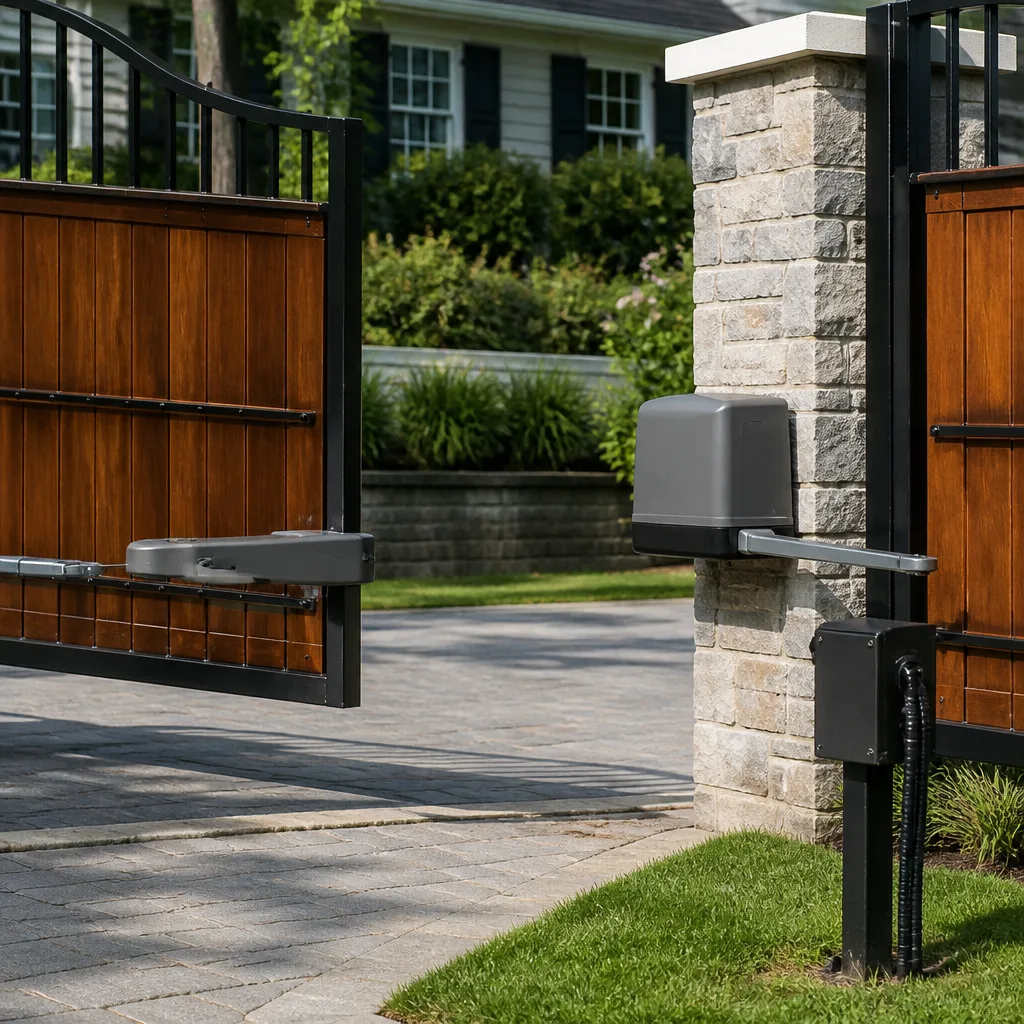
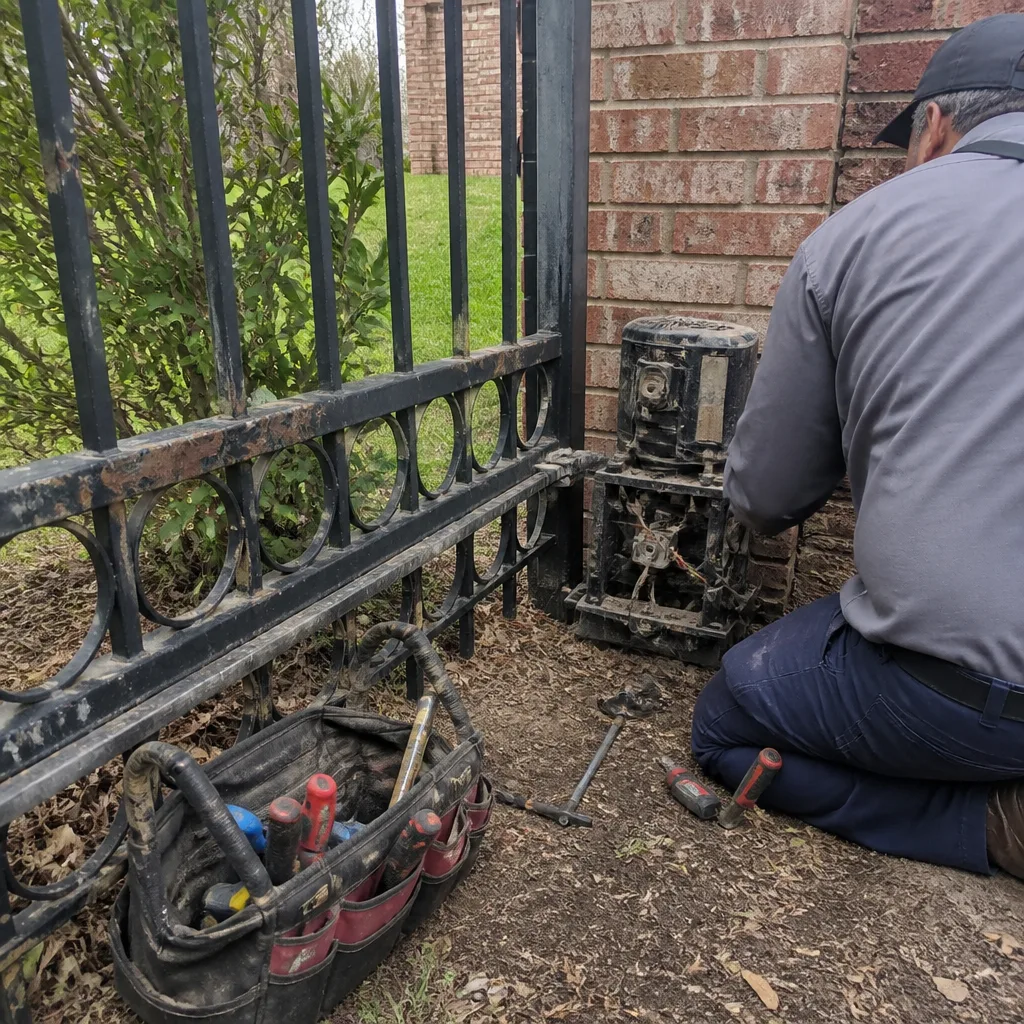 Before
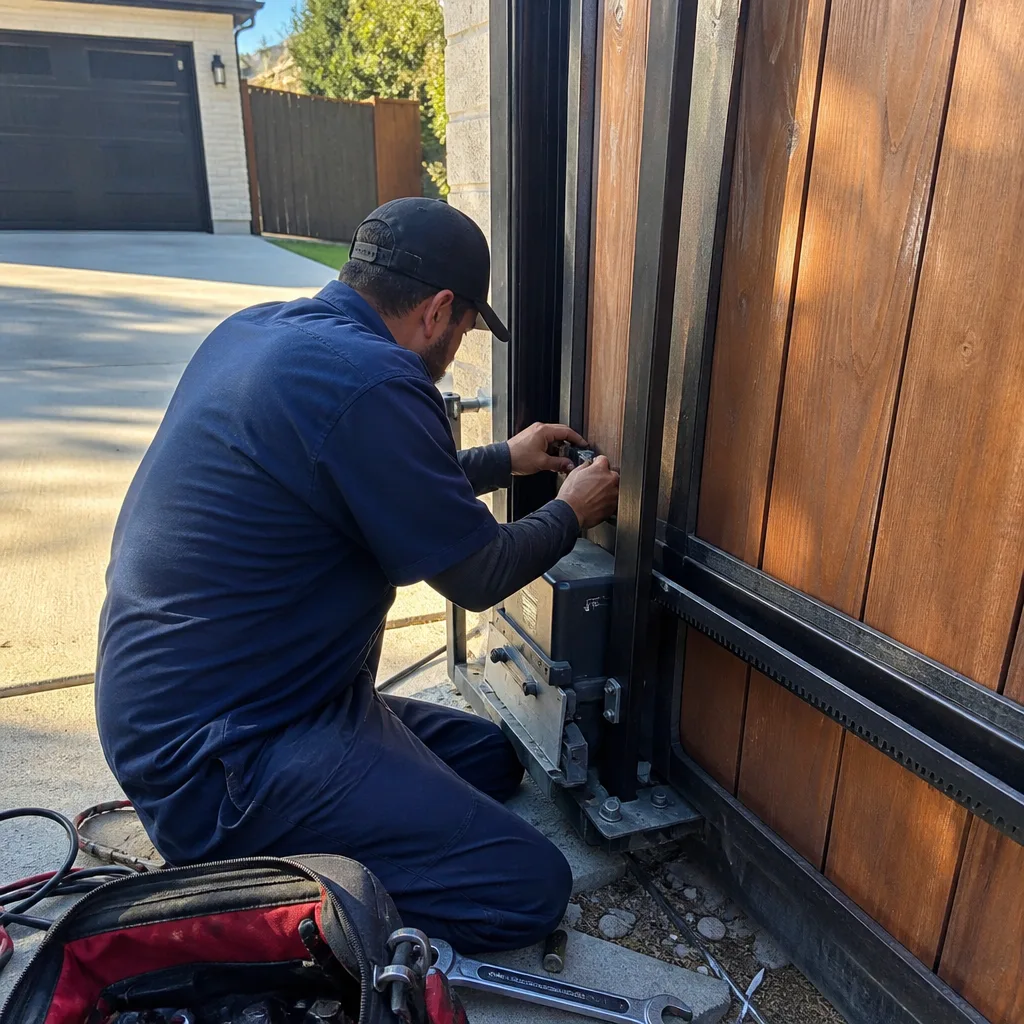 After
After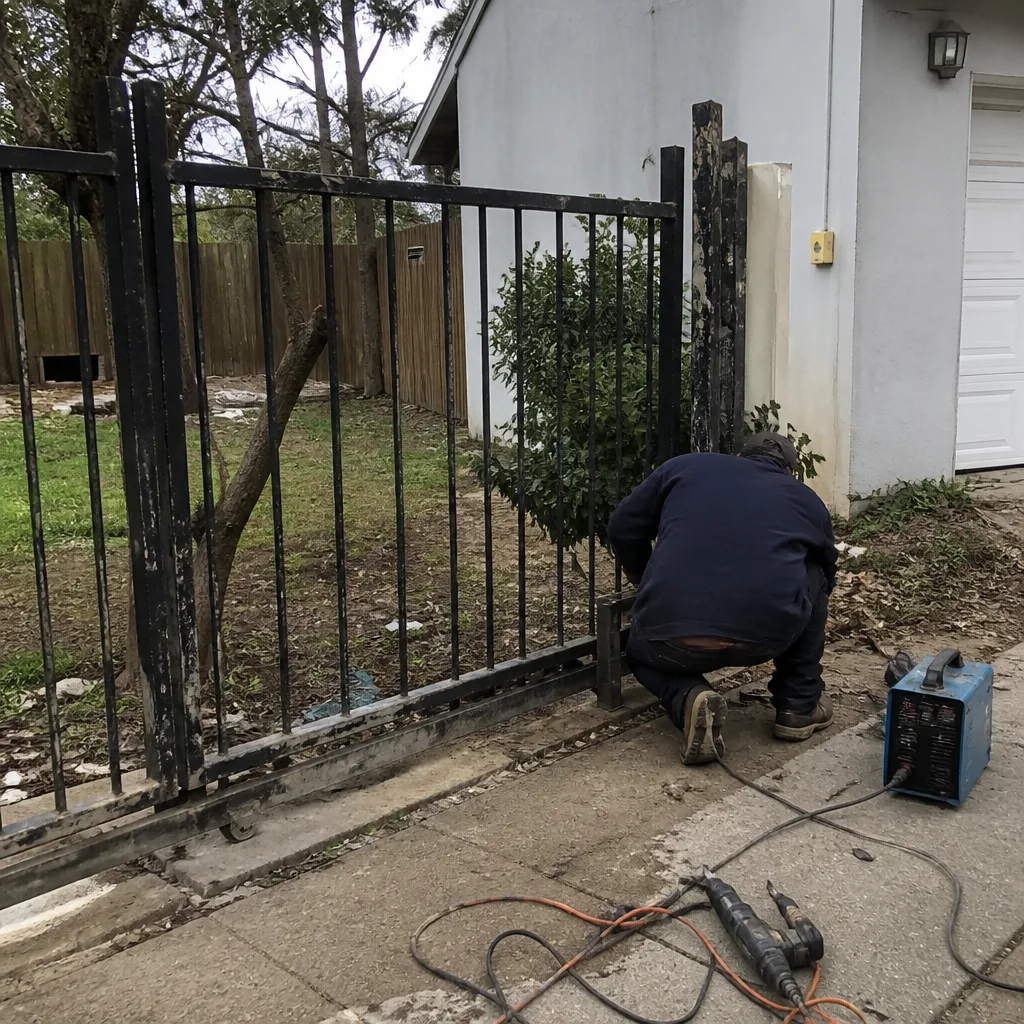 Before
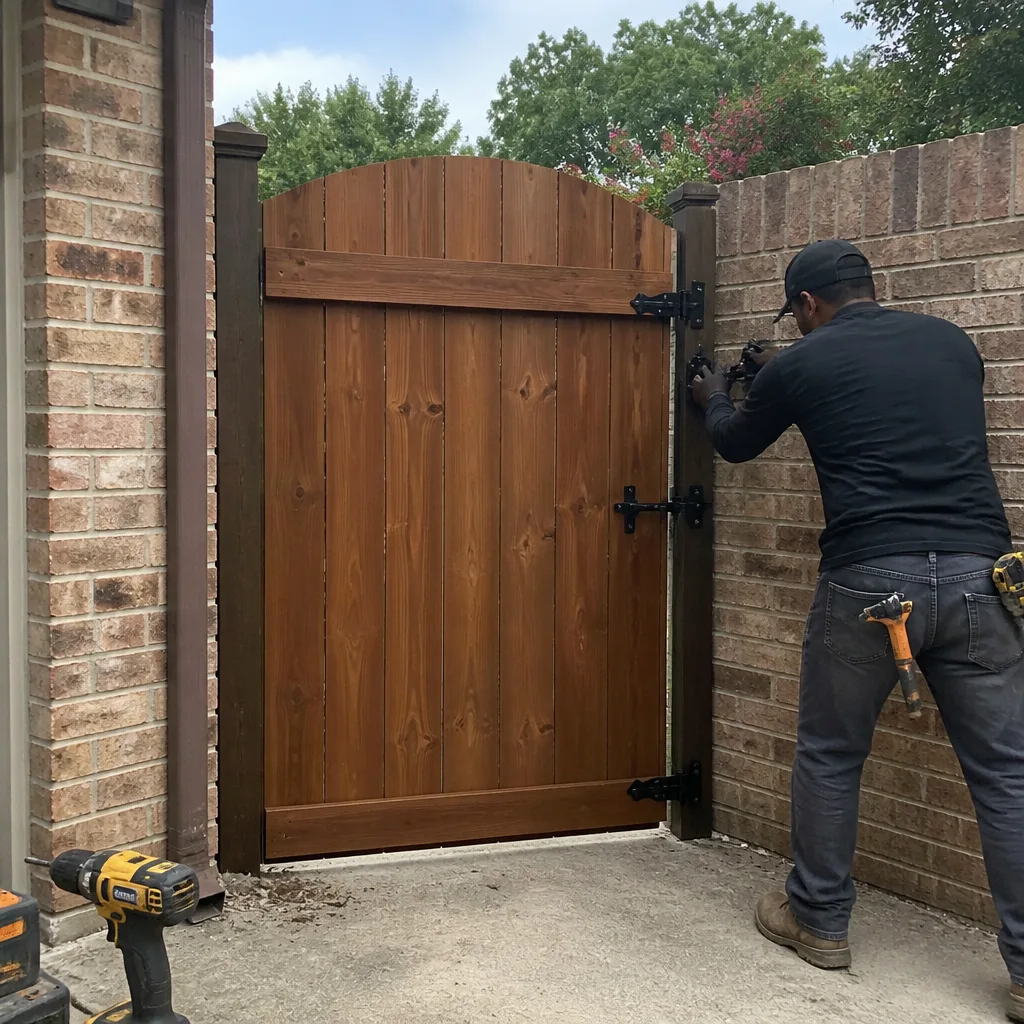 After
After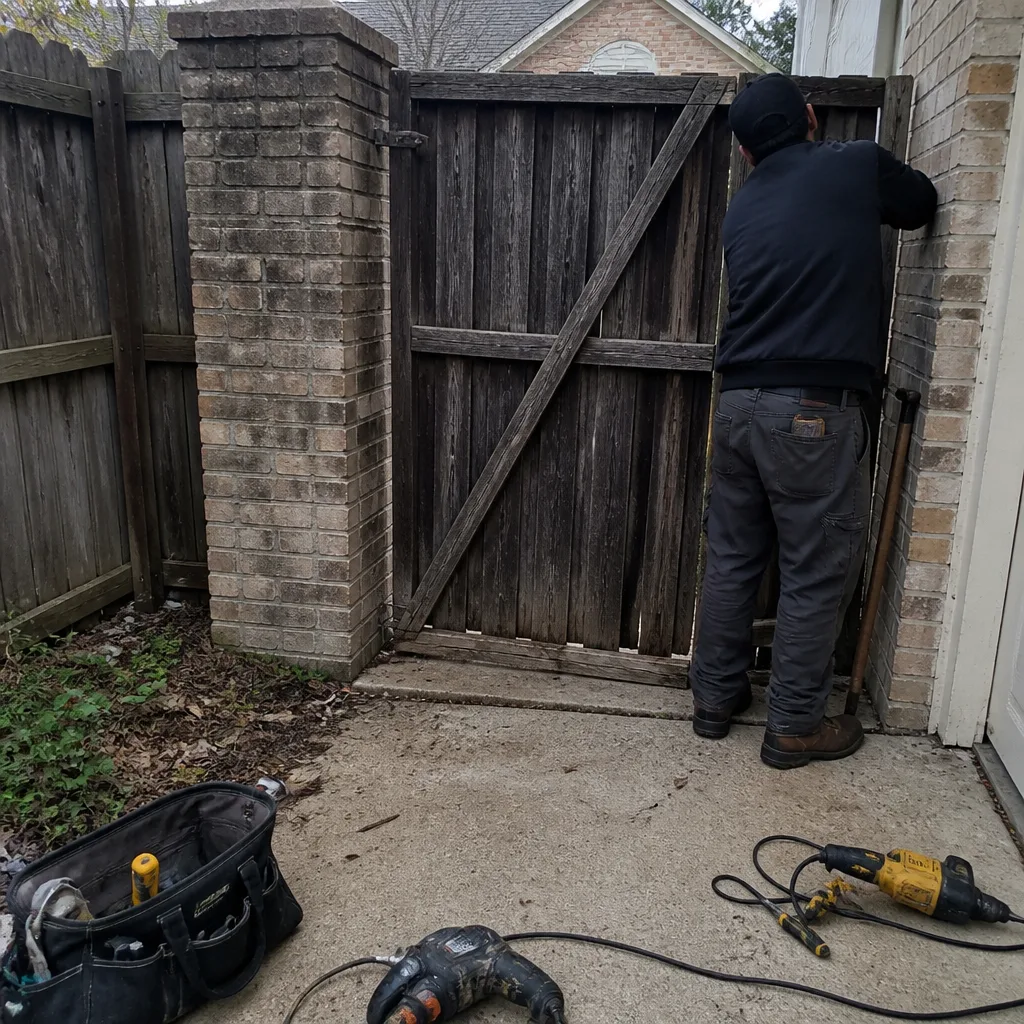 Before
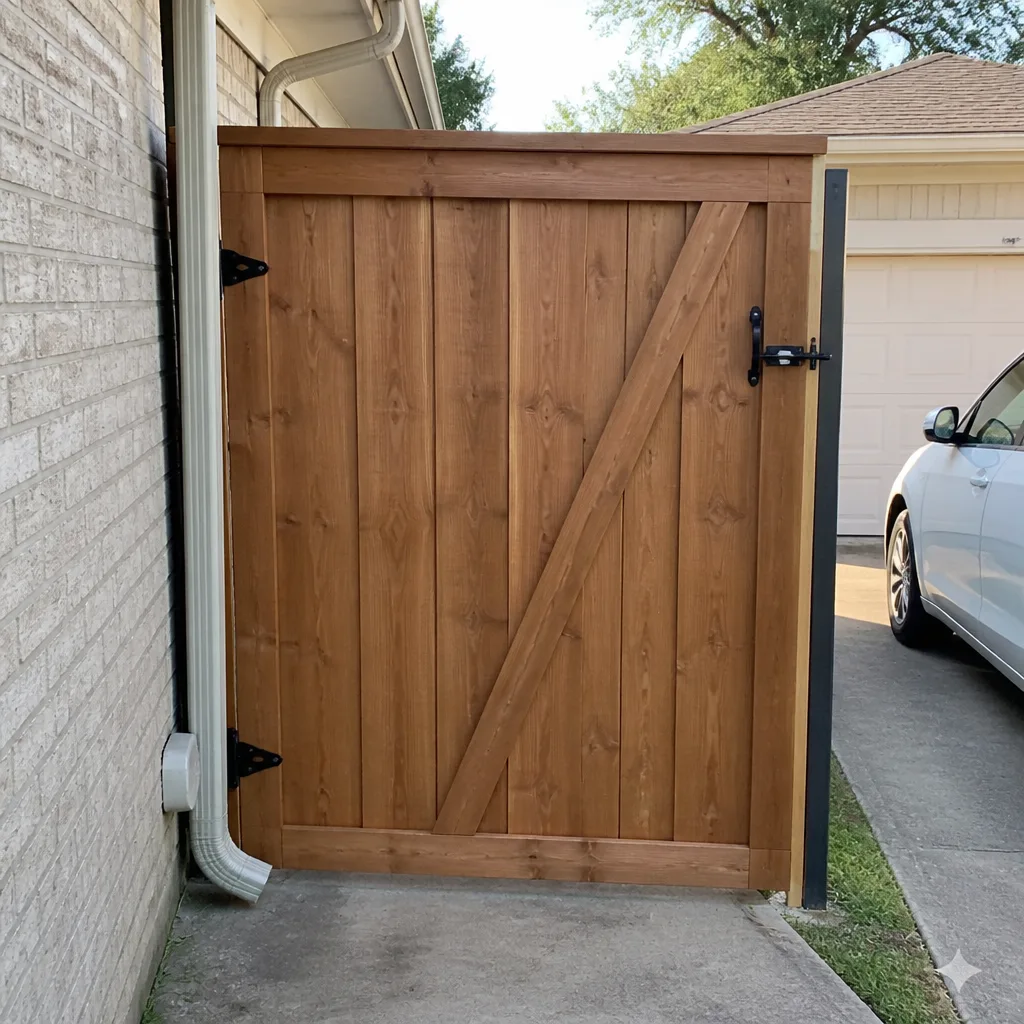 After
AfterGate Repair Warning Signs: A Euless Homeowner’s Reference Guide
Most Euless homeowners do not think about their driveway gate until the morning it refuses to open. Then they are late for work, blocked in or blocked out, and calling the first number they can find. Here is what years of gate work has taught us: gates almost never fail without warning. They creak, sag, hesitate, or grind for weeks before the final failure, but those warnings are easy to miss when you are not looking for them. This guide walks through what those warnings look like, what they mean, and what a Euless homeowner should do about them before a nuisance becomes a bill for a full replacement.
Quick Answer
A gate is telling you it needs attention when it makes new noises, moves unevenly, sags toward the latch, opens slower than it used to, or refuses to stop in the right place. In Euless, where summer heat expands metal and spring storms soak the controls, early warning signs usually show up long before a complete failure. Address these signs in the first few weeks and most gates can be repaired for a few hundred dollars; wait until the gate will not move and the fix often costs several times more.
Table of Contents
- Noise: The First and Most Reliable Warning
- Movement Problems: Slow, Jerky, or Uneven Travel
- Sagging Gates and Worn Hinges
- Opener Motor Trouble: Humming, Clicking, and Dead Controls
- Electrical and Wiring Issues in Euless Weather
- Safety Sensor and Auto-Reverse Problems
- Rust, Corrosion, and North Texas Climate Damage
- Common Mistakes to Avoid
- When to Call a Professional
- Frequently Asked Questions
- The Bottom Line
Noise: The First and Most Reliable Warning
A well-adjusted gate is quieter than most people expect. You should hear the motor hum and the wheels roll, but nothing that makes you turn your head. When a gate starts scraping, squealing, grinding, or rattling, something has changed in the metal to metal contact, and it will not fix itself.
We have worked on Euless gates where the homeowner told us the gate had been making noise “for a while, maybe a year.” By the time we opened the motor housing, the drive gear had worn down to smooth nubs. What would have been a $120 gear and bearing replacement on the first visit became a full operator swap.
The sounds to take seriously:
- High pitched squeal during travel: usually a dry or failing bearing in the opener or a wheel that has seized and is being dragged. Lubrication helps temporarily, but the underlying wear continues.
- Deep grinding from the motor housing: the drive gear or worm gear inside the opener is stripping. This is common on older gate operators that have never had a gear service.
- Metal on metal scraping from the gate itself: hinges are out of alignment or the gate has sagged enough to drag on the track or the driveway.
- Rattling when the gate moves over bumps or in wind: loose hardware, cracked welds, or a wheel that has lost its bushing.
Here is the honest guidance from 42 years of this work: noise is not a personality quirk your gate has developed. It is the sound of a mechanical problem getting worse with every open and close cycle. The longer the noise runs, the more parts the problem consumes.
Movement Problems: Slow, Jerky, or Uneven Travel
A healthy gate travels at a steady, predictable pace from fully open to fully closed. When that motion changes, the gate is working against something it should not be fighting.
In Euless, the most common cause of slower travel is heat. Through July and August, gate operators run hot, and a motor that is already marginal will slow down noticeably on a 100 degree afternoon. But heat alone does not explain a gate that has become permanently slower over months. That points to mechanical drag: rusted wheels, a failing bearing, a chain that has stretched and is rubbing, or a gate that has sagged into the ground track.
Watch for these specific patterns:
- Gate slows down at one specific spot: something in the track or the travel path is creating resistance there. Look for a bent wheel bracket, a low spot in the concrete, or a section of track that has been hit by a vehicle.
- Gate jerks or shudders mid travel: the chain or belt has a bad link, the drive gear has a missing tooth, or one wheel has locked up and is being dragged for a stretch.
- Gate starts fast then crawls: the motor is overheating during the cycle. This worsens in summer and often precedes full motor failure.
- Gate opens but will not close all the way, or vice versa: the limit switch has slipped, or the operator’s logic board is misbehaving. This is less of a mechanical problem and more of an adjustment or control issue.
When we are called to Euless homes for a gate that “quit opening all the way,” we often find the same root story: the wheels have not been greased in years and the opener has been pushing harder and harder until something gave out. The repair is straightforward when caught early.
Sagging Gates and Worn Hinges
A sagging gate is the most visible warning sign in the driveway, and the one homeowners most often rationalize. They say it has always leaned a little, or that the latch still catches if you lift it. But sag is structural. It means the frame or the hinges or the post are losing their ability to hold the gate square, and gravity wins eventually.
Heavy ornamental iron gates are common in Euless, and they are beautiful. They are also heavy, and weight is the enemy of a hinge. A gate that has sagged half an inch at the latch is putting constant sideways load on the hinge welds. Every time it opens and closes, that load works the welds like a slow crowbar.
The signs of structural trouble:
- The gate scrapes or drags on the drive side but not the hinge side: classic sag pattern. The far end has dropped.
- The latch does not line up without lifting the gate: the frame has twisted or the hinges have worn at the pivot points.
- You can see daylight between the hinge pin and its barrel: the hinge is worn and the gate is effectively loose on its post.
- Gate moves in the wind more than it used to: loose hinges or a failing frame make the whole assembly flex.
Weld repair and hinge replacement are core parts of what we do at Ironworks Gate Co. home. In most cases, a sagging gate can be squared back up and re-hung without replacing the gate itself, as long as the work is done before the welds crack through or the post bends.
Opener Motor Trouble: Humming, Clicking, and Dead Controls
The opener is the brain and muscle of an automatic gate, and it is also the component that helps the least when it is dying. A motor can run with a stripped gear for weeks, sounding fine while doing almost nothing, because a stripped gear makes a quiet clicking instead of a loud grinding.
Euless homeowners should know the difference between a dead opener and a dead remote. A gate that responds to the wall button but not the remote is a transmitter or receiver issue, not a motor failure. A gate that hums but does not move has voltage but no rotation, which points to the capacitor, the starting circuit, or a seized gearbox. A gate that clicks but does not respond to anything may have lost its limit setting, tripped a safety circuit, or blown a control board.
Our team is factory trained on LiftMaster, FAAC, BFT, Linear, Viking, Ghost Controls, DoorKing, Elite, and Mighty Mule. That matters, because a BFT control board does not behave like a Ghost Controls board, and a guess from a generalist handyman often means buying the wrong part. We have replaced more than a few “dead” openers in Euless that turned out to be a $45 limit switch or a corroded terminal block.
What to check before calling
- Does the gate respond to the wall button? If yes, the motor and board are alive and the remote is the problem.
- Does the gate respond to the keypad, or is the keypad dark? A dark keypad usually means it has lost power or its own battery is dead.
- Is the breaker for the gate circuit on? Euless storms trip breakers all the time, and a tripped breaker is a two minute fix.
- Is the gate in “manual” or “party” mode? Some gates have a physical disengage lever that lets the gate swing free. If the lever is pulled, the motor will run but the gate will not move.
If none of these resolve it, the problem is inside the operator, and that is a job for a trained technician. A live person answers our phone 24 hours a day, 7 days a week, so an Euless homeowner never has to leave a voicemail and wait.
Electrical and Wiring Issues in Euless Weather
Euless gets the full North Texas weather cycle: hundred degree summers, sudden spring thunderstorms, hard freezes in January. All of it works against gate wiring. Heat breaks down insulation. Moisture creeps into conduit and corrodes connections. Freeze cycles separate fittings and crack housing seals.
The electrical system on a gate is simple compared to a house, but it has the same failure modes. Most gate electrical problems come down to three things:
- Corroded terminals and connectors: the leading cause of intermittent gate behavior in Euless. A connection that has gone green from moisture causes resistance, and resistance causes heat, and heat causes failure.
- Damaged low voltage wire: landscape work, lawn mowers, and UV exposure all take a toll on the wire from the house to the gate. A nicked wire will work until rain gets into the nick, then the gate starts acting possessed.
- Failed circuit boards: a power surge during a thunderstorm can take out a control board even if the breaker holds. Boards are the most misdiagnosed part in gate repair, because a dead board looks identical to a dead motor to an untrained eye.
Why Euless homeowners should care about surge protection
Power surges do not just come from lightning. They come from the power company switching loads, from neighbors on the same transformer, and from the gate’s own motor kicking on and off. A surge protector on the gate circuit costs a fraction of a replacement board. We install them routinely on gates in Euless now, because the repair data from the last decade makes the case: protected boards live longer.
One pattern we have seen in Euless neighborhoods with older homes: the gate circuit was run with undersized wire decades ago, and it was fine when the opener drew 3 amps, but the replacement motor draws 6. That voltage drop makes the motor run hotter and the board work harder, and the gate opens slower every year. If your gate has been getting gradually slower over a few years and your home predates about 1990, have the feed wiring checked.
Safety Sensor and Auto-Reverse Problems
This section carries a safety warning, because it involves a gate that can hurt someone. Automated gates are heavy moving objects. An automatic gate opener is powerful enough to crush a person, especially a small child, if the safety systems are not working. This is not a theoretical risk: the U.S. Consumer Product Safety Commission has documented deaths and serious injuries involving automatic gates that failed to reverse.
Modern gate operators in the United States are required to have two safety mechanisms working together: a reversing feature that pushes the gate back if it encounters resistance, and photo eyes or edge sensors that detect an obstruction before the gate touches it. When either fails, the gate becomes dangerous.
The warning signs that a safety system is compromised:
- The gate reverses for no apparent reason: the photo eye is dirty, misaligned, or failing. Dirt and Euless dust film the lens over time, and a misaligned eye will read a false obstruction.
- The gate does not reverse when it meets resistance: the internal clutch or current sensor is out of adjustment. This is a genuine hazard and should be addressed immediately.
- One photo eye flashes or is dark: the sensor has lost its signal. The gate may default to a fail safe mode and refuse to close.
- The gate closes on a test object placed in its path: this is the test we recommend every homeowner perform twice a year. Place a trash can or a 2×4 in the gate path and try to close it. If the gate does not reverse, stop using the automatic function and disconnect the opener until a professional can inspect it.
- Bubbling paint or powder coat with orange streaks underneath: rust is already well established beneath the surface. The bubble is the tell.
- Rust at the weld joints: welds are the most porous part of the gate and the first place rust takes hold. This is also the structural weak point, so rust there is more serious than rust on a flat face.
- Rust at the bottom rail: sprinklers and standing water after storms keep the bottom rail damp. Rust here spreads until the rail is paper thin.
- Rust on the hinge posts: the post is the anchor for the whole gate. A post that has rusted through at the base is a full replacement project, not a touch up.
- Greasing the track or the wheels thinking it will fix a grinding noise. Grease on a track attracts dust and grit and makes the problem worse. The real issue is usually a worn bearing or a misaligned wheel, and grease hides the symptom while the wear continues.
- Replacing the remote when the problem is the receiver. We hear this one often in Euless. A homeowner buys new remotes, programs them, and the gate still will not respond. A receiver board costs less than a set of remotes in many cases.
- Ignoring a lagging gate because “it still works.” A gate that is getting slower is telling you the motor is working against growing resistance. Every week of lag is wear on the drive components.
- Welding a cracked hinge without fixing the alignment. A weld will crack again if the gate is still out of square. The sag has to be corrected first, then the hinge repaired. One without the other is a temporary fix.
- Disconnecting the safety sensor because the gate keeps reversing. This is the most dangerous mistake on this list. The false reversal is annoying, but the answer is to fix the sensor, not disable the protection.
- Burying low voltage wire without conduit. Direct burial wire does not mean protected wire. Rodents, tree roots, and shovels will find it. In Euless clay soil, wire in conduit has a dramatically longer life.
- Ignoring a leaning post. A post that has started to lean will lean further, and one day the gate will not close at all. Post repair is far cheaper than post replacement with concrete work.
Do not attempt to bypass a safety sensor or reverse function to keep the gate operating. The risk is not worth it. A trained gate technician in Euless can usually bring a misbehaving safety system back into compliance on a single visit, and that visit costs far less than the liability of a gate that hurts someone.
Rust, Corrosion, and North Texas Climate Damage
North Texas does not get the salt spray of the Gulf Coast or the road salt of a northern winter, so Euless gates rust more slowly than gates in other parts of the country. But they still rust. Humidity in the spring, morning dew, lawn sprinklers hitting the gate post, and the occasional pool splash all put water on metal. Once the powder coat or paint is compromised in one spot, rust starts there and spreads under the finish like a stain under glass.
The rust patterns we see most often on Euless gates:
Rust treatment is not just about appearance. It is a structural repair. Grinding out rust, treating the metal, and repainting or re-coating properly extends the life of the gate by years. It is the difference between a gate that lasts ten years and one that lasts forty. We have gates in Euless that were hung in the 1980s and still operate like new, because their owners dealt with surface rust when it first appeared instead of waiting for holes.
Common Mistakes to Avoid
When to Call a Professional
Some gate problems are safe to check yourself: a tripped breaker, a dead remote battery, a photo eye that needs cleaning. Other problems call for a trained professional with the right tools, because the risk of injury or property damage is real. Any work on a high tension spring, a counterweight system, a motor capacitor, or a control board with live voltage should be handled by someone who works on gates full time, not by a generalist handyman or a homeowner with a multimeter and a YouTube video.
Call a professional when the gate is sagging noticeably, when it makes grinding noise from the motor, when the safety reverse does not work, when the gate has come off its track, or when the gate has stopped responding altogether. Any time a gate is stuck open, a live person answers the phone 24 hours a day, 7 days a week. Ironworks Gate Co. offers free estimates in Euless. Call (806) 484-1837 and we will tell you what the repair costs before we touch a bolt.
Frequently Asked Questions
Most gate repairs in Euless fall between $180 and $800, depending on what failed. Common jobs like hinge replacement, wheel service, limit switch adjustment, and photo eye alignment run on the lower end. Opener gear replacement, control board replacement, and weld repair run higher. Every quote is given and agreed before any work starts. Call (806) 484-1837 for a free estimate on your specific gate.
Most gate repairs are completed in a single visit, and we keep common parts for Linear, BFT, and Viking operators on the trucks. If your gate is stuck open or stuck closed in Euless, call us and we will let you know how quickly we can be there. A live person answers the phone 24 hours a day, 7 days a week.
A new gate opener installed in Euless typically runs from $1,200 to $3,500, depending on the operator brand, the gate weight, and whether the wiring needs to be upgraded. The estimate includes the operator, mounting, limit and safety setup, and programming. We service LiftMaster, FAAC, BFT, Linear, Viking, Ghost Controls, DoorKing, Elite, and Mighty Mule, so we can match your existing setup or upgrade it without changing everything else.
We repair all gate types, including wooden farm gates, wood frame gates with decorative iron, and automatic wooden driveway gates. The structural principles are the same: the hinges and posts have to be square, and the operator has to be matched to the gate weight. Wood gates in Euless rot at the bottom rail more often than they sag from hinge failure, and we can rebuild the rail and re-hang the gate.
Yes. A motor that keeps running after the gate reaches its limit is a sign that the limit switch has failed or slipped. The motor can overheat, burn out, or continue pushing the gate past its stop point, which can bend the gate or damage the opener. Disconnect power to the operator and call for service. This is usually a straightforward limit switch repair, but it should be done before the motor is damaged beyond repair.
Every job we complete is backed by our 90-Day Done Right Promise. It is a written guarantee: if the work is not right, we come back and make it right, with no paperwork and no arguing. We have been serving local communities for over 42 years, and the company plans to be in town for another forty. A warranty is only as good as the company behind it, and we have been behind ours since 1984.
The Bottom Line
A gate is the largest moving machine most Euless homeowners own. It weighs hundreds of pounds, runs on electric power, and operates thousands of cycles a year outdoors in North Texas weather. It will need maintenance, just like a vehicle. The difference is that a gate gives plenty of warning before it fails: noise, sag, slow travel, and stubborn controls. Pay attention to those signs and a repair stays affordable. Ignore them and the same gate eventually needs a full operator replacement, structural welding, or both. When the warning signs show up, call a professional who works on gates every day. Call (806) 484-1837 for a free estimate in Euless. Done right, and backed in writing.
Written by Victor Salinas, Owner at Ironworks Gate Co., serving Euless since 2013.