
Quick Summary
This guide explains how to fix sagging gate post issues caused by soil movement, shifting footings, or hardware wear that lead to latch misalignment and dragging. Structural specialists at Ironworks Gate Co. provide honest technical insight showing that many leaning posts can be safely realigned and reinforced at the footing rather than undergoing aggressive, unnecessary full gate replacements. Readers will learn the step-by-step process of diagnosing, bracing, and resetting posts while knowing when to schedule a professional on-site assessment for heavy or automated systems.
How to Fix a Sagging Gate Post: Alignment and Repair Guide
Fixing a sagging gate post involves restoring the post to plumb and secure alignment, correcting the footing or anchorage when necessary, and adjusting hardware for smooth, interference-free operation. When a gate post leans, it can cause latch misalignment, ground dragging, or binding during operation. Footing and post repairs should be evaluated by a qualified professional when the gate is heavy, automated, unstable, badly rotten, bent, cracked, or supported by a failed footing.
Safety Warning: Gate leaves carry substantial weight and present serious pinch and crush hazards. Disconnect all electrical power to automated operators and consult the operator manufacturer or a qualified technician before performing mechanical work. Heavy gates, tensioned rigging, and structural excavation require qualified professionals and appropriate rated equipment.
Diagnosing and Repairing a Sagging Gate Post
Gate posts support dynamic loads as the gate opens and closes. As specialists at Ironworks Gate Co. point out, movement can occur when footings shift in loose soil, when foundations are inadequate for the installation, or when materials deteriorate over time.[4]
Inspection Distinction: A structurally sound post with a shifted footing or loose soil may sometimes be straightened. However, a post affected by severe rot, a cracked or failed footing, severe movement, or a damaged base generally requires excavation and replacement.
Footing and Depth Considerations
Foundation requirements vary depending on gate size, intended use, local soil, frost and drainage conditions, and applicable specifications. For example, cited ASTM standard specifications give a 24-inch minimum post-hole depth and diameter guidance for chain-link posts under normal conditions, while final requirements depend on local site conditions and intended use.[1]
Tools, Hardware, and Concrete Materials
All materials, hardware, and foundation work should follow applicable engineering requirements and manufacturer instructions.
Recommended Tools and Safety Gear
- Alignment and digging: Magnetic level, digging bar, post-hole digger, shovel, and rated alignment or bracing tools.
- Hand tools and safety: Wrenches, sockets, clamps, heavy work gloves, safety glasses, and steel-toe boots.
Recommended Materials
- Foundation: Concrete mix, gravel base material, and bracing lumber appropriate for the installation, adhering to manufacturer guidelines and local building requirements.
- Hardware: Replacement hinges, fasteners, and corrosion-resistant coatings appropriate for the specific gate design and load.
Step 1: Diagnose Post Lean vs. Hardware Wear
Start by identifying whether the post has shifted or if the hardware needs adjustment or replacement.
Checking Post Alignment and Plumb
- Place a level against adjacent sides of the post to determine if it is out of plumb.
- Examine the base where the post meets the ground or footing for soil separation, severe movement, or cracking.
Checking Hinges and Mounting Points
Inspect hinges, fasteners, and related components for wear, deformation, or damage. If the post is plumb and sound, adjusting or replacing hardware may resolve the issue. If the post or footing has shifted, the post must be realigned or reset.
Step 2: Relieve Gate Weight and Protect Operator Mechanisms
Do not attempt to adjust or excavate around a structural post while it is bearing the full unsupported weight of the gate.
Automated Gates
For automated gates, disconnect power to the operator and consult the operator manufacturer or a qualified technician before proceeding with repairs.
Supporting or Removing the Gate Leaf
- Support the weight of the gate leaf using suitable blocking or lifting equipment.
- Relieve downward tension on hinge assemblies.
- When necessary for safety or access, detach the gate leaf from the post and set it securely aside.
Step 3: Align and Brace the Post
Need how to fix sagging gate post?
We’re available now - call for a fast, free estimate.
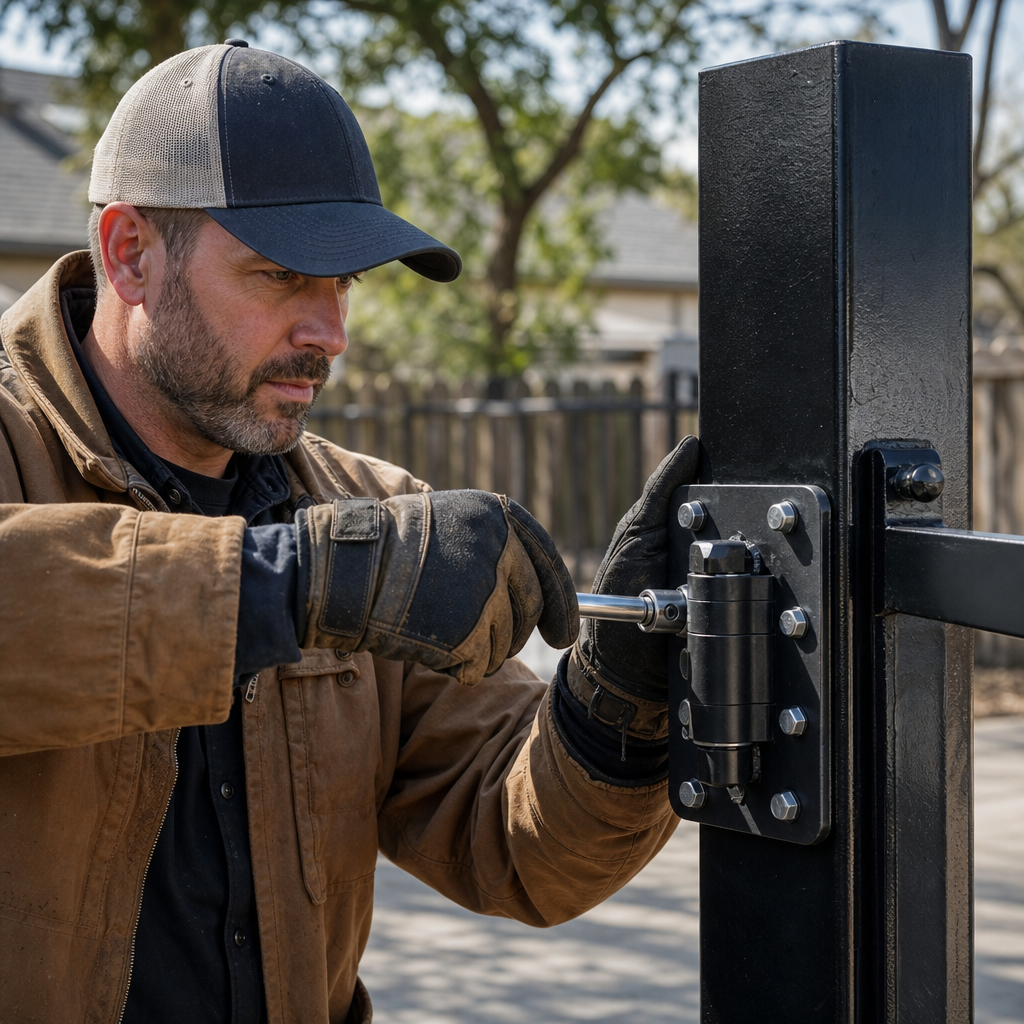
If the post is structurally sound and eligible for realignment, bring it back to plumb using safe, controlled methods. Heavy gates and tensioned rigging require qualified professionals and appropriate rated equipment.
Rigging and Alignment
- Attach rated rigging securely to the post, using padding to protect finishes.
- Apply controlled force using appropriate, rated tensioning equipment anchored to a verified, stable anchor point.
- Check alignment with a level on both axes until the post is plumb.
Installing Rigid Bracing
Secure diagonal bracing from the post down to secure stakes or ground anchors to hold the post firmly plumb and aligned.
Step 4: Excavate and Reinforce the Footing
When footing remediation is required, excavate around the shifted base and correct the foundation according to site conditions and manufacturer instructions.
Excavating the Base
- Excavate soil around the footing to allow proper alignment and inspection.
- Inspect the depth and condition of the existing footing to ensure subsoil stability.
- Remove loose dirt and broken material from the excavation.
Pouring Concrete and Setting
According to technical guidance from Ironworks Gate Co., place concrete around the base according to applicable engineering requirements and manufacturer instructions. Ensure gate posts are braced and held plumb and aligned until the concrete has set.
Step 5: Inspect, Adjust, and Lubricate Hardware
Once the post is plumb and securely set, re-hang the gate and inspect all hardware.
Inspect and adjust hinges, fasteners, and related mounting components to ensure the gate hangs level and operates smoothly without interference. Lubricate moving hardware components where necessary according to manufacturer recommendations.
Step 6: Automated Gate Verification
Before reconnecting automated operators, verify that the gate swings smoothly by hand without binding or resistance.
Restore power only after mechanical alignment is complete, and consult the operator manufacturer or a qualified technician to verify operator attachment, limit settings, and safety device operation.
Frequently Asked Questions About Gate Post Repair
Why is my gate post leaning or sagging?
As noted by Ironworks Gate Co., gate posts lean due to inadequate or shifted footings, changing soil and moisture conditions, loose fasteners, worn hinges, or physical deterioration such as wood rot or base damage.[3]
Can I straighten a sagging gate post without digging it up?
A structurally sound post in loose soil can sometimes be realigned and braced. However, if the footing has cracked, failed, or moved significantly, excavating and resetting or replacing the footing is necessary.
When should I hire a professional gate repair service?
Footing and post repairs should be evaluated by a qualified professional when the gate is heavy, automated, unstable, badly rotten, bent, cracked, or supported by a failed footing.
What guidelines apply to gate post footing depth?
Footing dimensions depend on gate size, intended use, local soil, frost and drainage conditions, and applicable specifications. Cited ASTM material provides a 24-inch minimum post-hole depth and diameter guidance for chain-link posts under normal conditions, while final requirements depend on local site conditions and intended use.[2]
Need how to fix sagging gate post?
We’re available now - call for a fast, free estimate.
Sources
- UFC 4-022-03 Security Fences and Gates – media.defense.gov
- FENCE (382) – efotg.sc.egov.usda.gov
- PRODUCT MANUAL – Chain Link Fence Manufacturers Institute – chainlinkinfo.org
- Standard Practice for Installation of Chain-Link Fence – avadocuments.com
Related reading: Automatic Gate Sensors | Call Now-10% Off | Same-Day Service | Free Estimate
Related reading: Driveway Gate Sensor Repair Euless | Call Now-10% Off | On-Site in 60 Minutes | Free Estimate
Related reading: How to Open Sliding Gate Manually | 10% Off & Free Estimate | Same-Day Service
Frequently Asked Questions
How long should I wait for the concrete footing to cure before rehanging my gate?
You should allow the concrete footing to cure for at least 48 to 72 hours before rehanging the gate leaf and applying structural loads. Specialists at Ironworks Gate Co. recommend keeping rigid bracing secured throughout this curing window to ensure the post remains dead-plumb under tension.
How do I know if my sagging gate post can be repaired without replacing the whole gate?
A sagging post can usually be saved if the post material is structurally intact and the failure is strictly due to loose soil, hardware wear, or shifted footings. While aggressive contractors often push for complete gate replacement, Ironworks Gate Co. provides honest evaluations to realign and reinforce the existing post foundation whenever feasible.
Can a leaning gate post cause permanent damage to an automatic gate opener?
Yes, even a slight post lean causes binding, dragging, and latch misalignment that forces automated operators to push beyond their calibrated limits, risking motor burnout. Calling Ironworks Gate Co. to realign the structural post and recalibrate operator travel settings will prevent expensive drive-mechanism repairs.
About the author
 |
Marcus Caldwell Marcus Caldwell is a perimeter security specialist with over eight years of experience in access control systems and automated gate solutions. He frequently writes about residential and commercial gate maintenance, focusing on practical troubleshooting and cost-effective repair strategies for property owners in the DFW metroplex. Marcus holds a certification in Automated Gate Systems Design from the American Fence Association. |
Gate not opening, off track, or opener dead?
We’re available now - call for a fast, free estimate.
Call Now - Free Estimate