
Quick Summary
Following systematic ironworks gate co gate troubleshooting steps enables property owners to quickly determine whether an automatic gate failure stems from power supply interruptions, sensor obstructions, or physical track binding. While basic tasks like cleaning photo-eye lenses and checking breakers can be handled safely at home, Ironworks Gate Co. advises professional intervention for internal control board diagnostics, high-voltage wiring, and heavy structural realignment. After reading this guide, property owners will know how to perform essential preliminary safety checks and when to contact Ironworks Gate Co. for expert mechanical repairs or same-day service.
Gate Troubleshooting Steps: Fast Fixes and Safety Guide
These practical gate troubleshooting steps outline general guidance on how to safely verify power supplies, inspect photo eyes, and check for mechanical jams before calling for service. Specific troubleshooting details and procedures require confirmation in the manufacturer manual for your specific operator model. While basic breaker checks and track cleanouts can often be handled directly by property owners, automated gate operators use high voltage and high-torque mechanical components that demand caution.
Following a structured diagnostic sequence helps you isolate whether an issue comes from physical binding, safety-circuit trips, or power supply faults. When an operator requires circuit board testing, electrical repairs, or structural realignment, calling a qualified technician such as Ironworks Gate Co. ensures the system is serviced safely and correctly.
Troubleshooting Your Gate: Diagnostic Guide
Troubleshooting Your Gate: Diagnostic Guide in brief: If your automatic gate will not open, first isolate physical resistance only when permitted by the manufacturer instructions and by keeping people clear of the gate. Next, clean and check the safety photo eyes, inspect the track for gravel or debris, and confirm power delivery at the main breaker. If the motor hums, clicks, or indicates a fault without moving, shut down power to protect the system and consult the operator manual or contact a qualified technician.[2]
Safe troubleshooting requires isolating physical mechanical binding and safety-circuit trips before resetting electrical breakers. Following general diagnostic guidance and manufacturer instructions protects sensitive control components and prevents motor strain against a stalled load.
Safety-First Isolation Protocol
- Inspect Entrapment Zones and Sensors: Clean photo-eye lenses, clear cobwebs, and remove dirt or leaves from the pathway. Some UL 325-compliant protection systems are designed to stop and reverse gate movement within 2 seconds after detecting an obstruction.
- Test Manual Release and Mechanical Balance: Manual-release and hand-movement tests should be performed only when permitted by the manufacturer instructions and by keeping people clear of the gate. Check whether the gate moves without dragging, grinding, or binding on the hinges, track, or guide rollers.
- Verify Power Delivery: Check your dedicated breaker and reset any tripped GFCI outlets. If the breaker trips immediately upon resetting, turn it off and leave it off to prevent damage.
Safety Guidelines and Professional Service
Modern safety requirements exist for good reason. The CPSC reported 32 automatic-gate-related deaths since 1985, including 20 child deaths. While clearing track debris and cleaning sensor lenses are basic homeowner tasks, troubleshooting electrical wiring, internal mechanisms, and control boards requires professional service and reference to the manufacturer manual.[1]
Automatic Gate Diagnostic Overview
Effective automatic gate troubleshooting starts with general mechanical checks before moving to electrical circuits. Isolating physical friction and track obstructions helps protect the motor.
Common Gate Failure Symptoms
Gates that stop halfway, open unexpectedly, or refuse to latch may suffer from obstructed optical sensors, track debris, or hinge drag. Running through physical checks first keeps you from misdiagnosing a simple mechanical obstruction as a major electrical failure. Always consult the operator manual for specific symptom guidance.
Targeted Diagnostics and Safety Standards
UL 325 requires at least one independent primary and one independent secondary entrapment-protection method for each applicable entrapment zone. Common examples include optical photo eyes, contact sensing edges, inherent motor current detection, adjustable clutch or pressure-relief devices, audio alarms, and continuous-pressure control switches. Some UL 325-compliant protection systems are designed to stop and reverse gate movement within 2 seconds after detecting an obstruction.[3]
Gate Opener Diagnostics: Motors and Power Issues
When an operator clicks or hums but the gate does not move, the issue is generally related to mechanical binding or power delivery. Avoid repeatedly pressing controls or cycling breakers on a stalled motor.
Safe Power and Component Inspection
To inspect your opener safely:
- Turn off power to the gate operator at the main breaker panel before opening the housing cover.
- Perform a visual inspection according to the manufacturer manual, checking for obvious physical damage or debris.
- Hire a professional technician, such as the team at Ironworks Gate Co., for live voltage testing, electrical component replacement, or wiring repairs.
Drive Motor and Safety Compliance
UL 325 addresses operational hazards to reduce fire, shock, and mechanical entrapment risks. Verify that the gate operator class is appropriate for the installation and that all required safety devices are installed and operating correctly.
Electric Gate Wiring, Loops, and Safety Diagnostics
Need ironworks gate co gate troubleshooting steps?
We’re available now - call for a fast, free estimate.
Troubleshooting electric gates requires a systematic review of external safety sensors and control inputs according to manufacturer documentation.
Safety Device Inspection
Safety devices must never be bypassed or hardwired out of service to force a gate to operate. If you suspect damaged wiring or faulty vehicle detection devices, consult the manufacturer manual or contact a qualified technician.[4]
UL 325 Entrapment Protection Guidelines
UL 325 requires at least one independent primary and one independent secondary entrapment-protection method for each applicable entrapment zone. Standard safety checks include:
- Inspect contact sensing edges along the gate edges for tears, weather cracks, or damage.
- Check infrared photo eyes across the opening to confirm lenses are clean, dry, and properly aligned per manufacturer instructions.
- Verify that the operator rating matches the installation and that all monitored safety devices communicate properly with the control board.
Gate Installation and Safety Considerations
If your gate requires constant adjustments or lacks modern entrapment protections, upgrading or retrofitting the system may be recommended. Proper installation ensures that structural posts and hinges stay aligned.
Structural Installation Considerations
Adequate post depth, solid footings, and proper framing prevent gate sag and hinge binding. Keeping the structure plumb and level eliminates mechanical drag on the opener motor.
Access Control Integration
When installing or replacing access control keypads, intercoms, or receivers, confirm compatibility with the gate operator and verify that all monitored safety devices connect strictly according to manufacturer instructions.
Driveway Gate Maintenance and Diagnostics
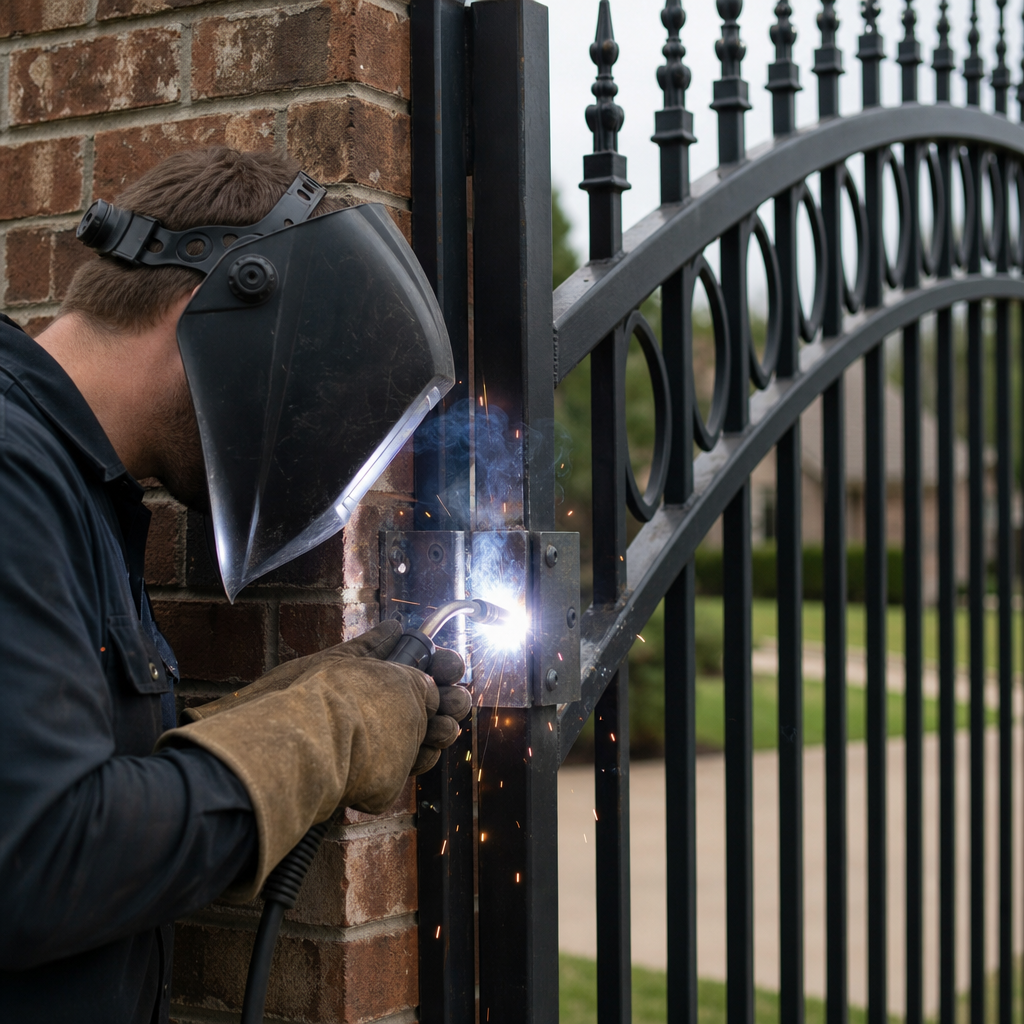
Routine driveway gate maintenance helps keep the installation operating smoothly. Checking track alignment and clearing sensors according to manufacturer recommendations prevents unnecessary motor strain.
Residential Gate Diagnostics
When a residential driveway gate stops responding, manual-release and hand-movement tests should be performed only when permitted by the manufacturer instructions and by keeping people clear of the gate. This helps determine whether the gate is experiencing mechanical binding or an electrical issue.
Commercial Gate Maintenance
Commercial properties subject gates to high duty cycles. Regularly inspecting guide rollers, wiping down photo eyes, and checking safety edges helps prevent unexpected downtime. Refer to the manufacturer manual for recommended maintenance schedules and lubrication specifications.
Iron and Steel Gate Realignment and Hardware Care
Heavy iron and steel gates put continuous load on mounting posts and hinge assemblies. When a gate drags or catches on its latch, the issue should be resolved by realigning physical hardware rather than forcing operator limits.
Fixing Sagging Hinges and Posts
Worn hinges and shifting posts create heavy physical drag. Check post alignment and hinge hardware for physical wear or binding before making adjustments to operator settings.
Structural Hardware Repairs
According to Ironworks Gate Co., correcting misaligned hinge brackets, mounting plates, or posts restores physical balance. Once structural alignment is restored, the gate operator can function without experiencing excessive mechanical resistance.
Sliding Gate and Swing Gate Diagnostics: Tracks, Chains, and Hinges
Need ironworks gate co gate troubleshooting steps?
We’re available now - call for a fast, free estimate.
Sliding and swing gates face different mechanical demands. Isolating physical drag along tracks or swing pivots is the first step before evaluating electrical controls.
Sliding Gate Track Clearing and Chain Maintenance
Slide gate travel issues are commonly caused by dirt, gravel, or ice packed into the track, or incorrect chain tension. Consult the specific manufacturer manual for proper chain tensioning guidelines, track clearance instructions, and approved lubrication methods.
Swing Gate Actuator and Hinge Alignment
As technicians at Ironworks Gate Co. note, swing gate problems often relate to pivot binding or post movement. Address hinge alignment and post stability issues before adjusting operator arms to prevent mounting components from binding under load.
Key Parts and Components in Automatic Gate Systems
An automatic gate system relies on mechanical hardware working together with electronic access controls and safety devices.
Mechanical Hardware
Mechanical parts support and guide the physical gate. General items include:
- Hinges and pivot assemblies
- Ground wheels and roller bearings
- Guide rollers and track hardware
- Drive chains, belts, or gearboxes
- Physical positive stops and limit assemblies
Electronic and Safety Devices
Electronic components manage power, access signals, and entrapment protection. General items include:
- Logic control boards and motor relays
- Vehicle detection sensors
- Monitored infrared photo-eye sensors
- Contact safety edges
- Access controls, receivers, and keypads
Gate Opener Diagnostics by System Type
Different gate operators provide specific built-in diagnostic tools to help identify problems.
Diagnostic Flash Codes
Many modern control boards feature diagnostic LED indicators that display specific flash sequences. Check the operator manual to determine whether a code indicates an activated safety sensor, a limit position status, or an overload condition.
Hydraulic, Linear, and Solar Systems
System requirements vary widely across linear actuators, hydraulic operators, and solar-powered units. Consult the specific manufacturer manual for maintenance guidelines, fluid specifications, and battery care requirements.
Understanding Gate Troubleshooting and Maintenance
A systematic diagnostic approach addresses root causes rather than replacing parts unnecessarily. Resolving mechanical resistance and safety faults first protects system components.
Diagnostic and Service Considerations
Work methodically from physical hardware checks to safety sensors and power supplies. Test stopping or reversal only according to the manufacturer-approved procedure, and never bypass or disable safety devices.
Typical Diagnostic and Repair Scope
| Service Category | Diagnostic Evaluation | Minor Hardware Adjustment | Major Component Service |
|---|---|---|---|
| Common Scope | Sensor alignment and electrical checks | Roller, hinge, and track maintenance | Motor, control board, and drive assembly repair |
| Power Verification | Yes | Yes | Yes |
| Safety Sensor Check | Yes | Yes | Yes |
Frequently Asked Questions About Gate Troubleshooting
Why is my automatic driveway gate not opening or closing?
Common causes include tripped electrical breakers, dirty or misaligned photo eyes, depleted remote batteries, or physical debris blocking the track. Manual-release and hand-movement tests should be performed only when permitted by the manufacturer instructions and by keeping people clear of the gate.
How do I reset my electric gate opener system?
Reset procedures vary by model. Users should consult the operator manual before changing settings or attempting a system reset.
What should I do if my gate makes a grinding or clicking noise?
Unusual noises generally point to mechanical binding, worn hardware, or power-delivery issues. Turn off power to prevent motor strain and consult the manufacturer manual or a qualified technician for component diagnosis.
How do I test and align electric gate safety sensors?
Test stopping or reversal only according to the manufacturer-approved procedure, and never bypass or disable safety devices. Check that optical lenses are clean, unobstructed, and aligned according to the specific product manual.
What are the most common reasons for automatic gate opener failure?
Frequent failure points include power supply interruptions, physical track or hinge obstructions, and misaligned or obstructed safety sensors.
When should I call a professional gate repair technician instead of DIY troubleshooting?
Call a professional such as Ironworks Gate Co. whenever troubleshooting involves high-voltage electrical wiring, internal control board servicing, complex structural repairs, or testing specialized safety and vehicle detection circuits.
Need ironworks gate co gate troubleshooting steps?
We’re available now - call for a fast, free estimate.
Sources
- New Safety Standard for Automatic Security Gates Helps … – cpsc.gov (2000)
- ULSE Releases Report Piloting Assessment of Standards’ Impact on Mitigating Injuries and Deaths | UL Standards & Engagement – ulse.org
- continued on page 48 – dasma.com (2018)
- [PDF] Gate Operators – The Code Authority – code-authorities.ul.com (2000)
Related reading: Can I Fix Electric Gate Myself Euless – 10% Off & Free Estimate – Same-Day Service
Related reading: How to Fix Sagging Gate Post – Call Now-10% Off – Same-Day Service – Free Estimate
Related reading: Automatic Gate Sensors | Call Now-10% Off | Same-Day Service | Free Estimate
Frequently Asked Questions
What should I do if my gate stops and reverses midway with no visible obstacle?
A gate reversing midway often indicates misaligned photo-eye sensors, worn hinge friction triggering the operator's internal force limits, or an improperly tensioned drive chain. Check sensor alignment and clear dirt from the optical lenses first. If the problem persists, contact Ironworks Gate Co. to safely calibrate the operator force settings and inspect for structural hinge drag.
How do I interpret the diagnostic flashing LED codes on my gate control board?
Flashing LED patterns on the main logic board indicate specific system states, such as triggered entrapment sensors, low battery voltage, or motor overload faults. You can cross-reference the flash sequence with your operator manual to isolate the active circuit. For complex electronic faults or control board replacements, Ironworks Gate Co. provides professional diagnostic testing and repair.
Is it safe to move an electric gate manually during a power outage?
Disengaging the manual release is safe only when the operator power is disconnected and the swing or slide path is completely clear. Never force a gate open if you feel severe resistance, as this signals structural hinge failure or a damaged track. If the gate does not glide freely by hand, call Ironworks Gate Co. for an on-site hardware inspection.
About the author
 |
Marcus Caldwell Marcus Caldwell is a perimeter security specialist with over eight years of experience in access control systems and automated gate solutions. He frequently writes about residential and commercial gate maintenance, focusing on practical troubleshooting and cost-effective repair strategies for property owners in the DFW metroplex. Marcus holds a certification in Automated Gate Systems Design from the American Fence Association. |
Gate not opening, off track, or opener dead?
We’re available now - call for a fast, free estimate.
Call Now - Free Estimate